Share Zadar with friends and start planning your trip together.
How to get to Zadar
Have a great tip for Zadar or another alternative to popular destinations?
Share your thoughts on Zadar or suggest another authentic alternative to popular destinations. Your tips help others rediscover their love of travelling - while giving popular destinations a little room to breathe.
Please help us keep all core features free to use by using these affiliate links!
Day 1: Old Town layers, coffee culture, and that famous sunset
Ease into Zadar on the peninsula where Roman streets, Venetian walls and post‑war modernism sit side by side. Start early for soft light, short queues, and a taste of everyday life before the crowds arrive.
Morning: Enter via the Land Gate and wander to the daily market by the Sea Gate for fruit and local cheese, then join the špica ritual with a long coffee on Narodni trg. Climb the cathedral bell tower for the best city orientation; it opens earlier than most sights and the light is perfect for photos.
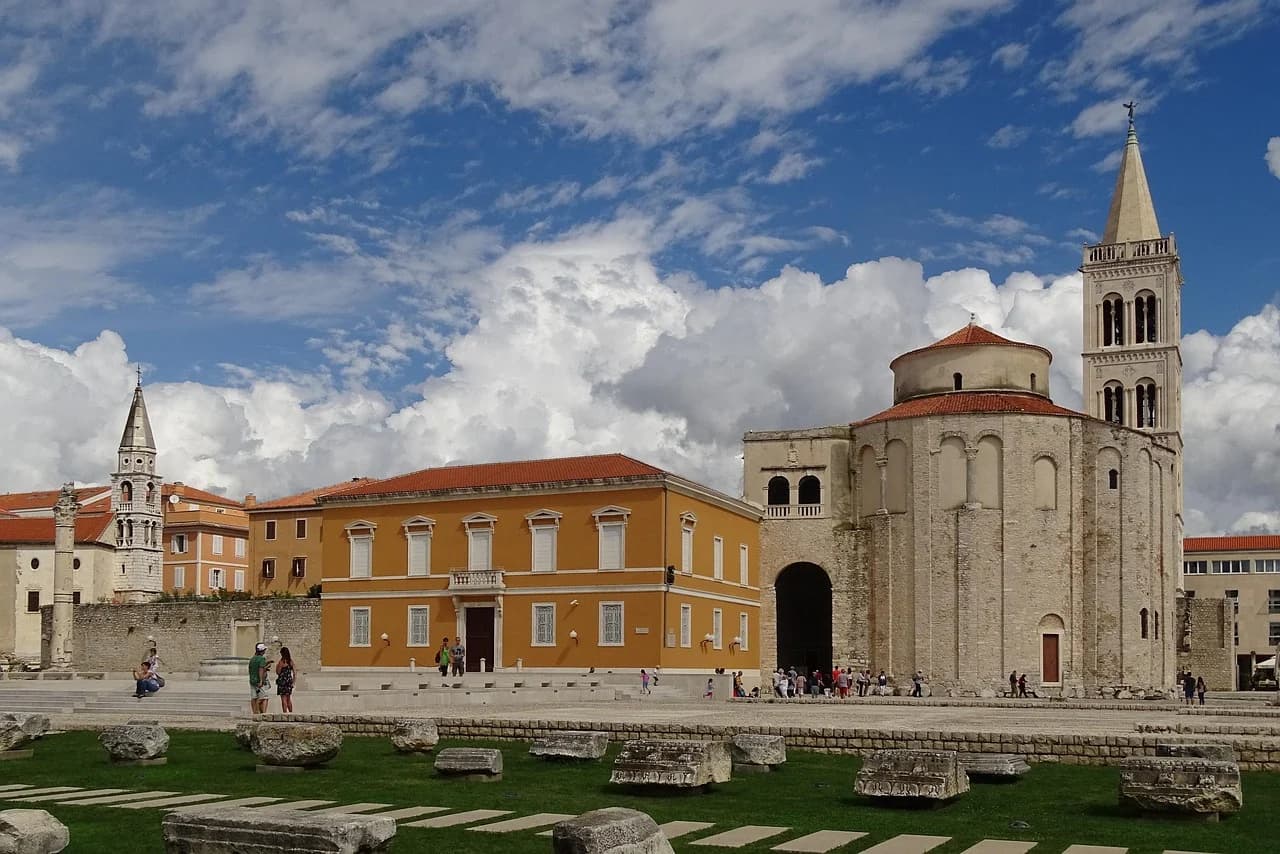
Midday: Explore the Roman Forum and the Church of St. Donatus; step inside the Gold and Silver of Zadar exhibition next door for a cool, quiet hour if it’s hot or windy. Walk Kalelarga end to end, ducking into side alleys for artisan shops and shaded courtyards.
Afternoon: Loop through Five Wells Square and Queen Jelena Madijevka Park above it, then follow the restored UNESCO‑listed walls back towards Foša harbour. Lunch in the Varoš backstreets at a small konoba; a short, handwritten menu usually means seasonal, local food.
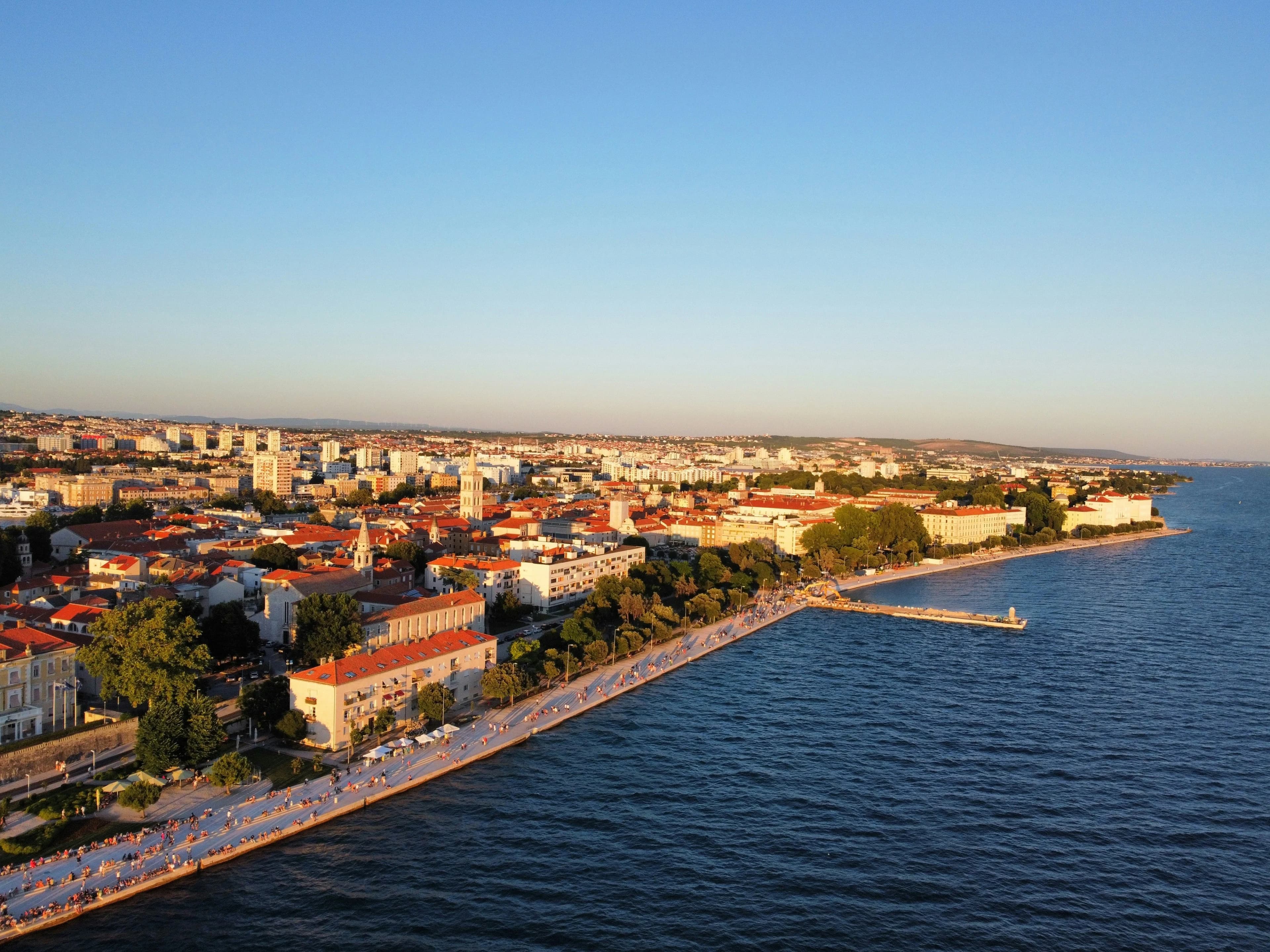
Evening: Stroll the Riva well before sunset and settle on the Sea Organ steps; arrive 45–60 minutes early for golden hour and stay for the Greeting to the Sun afterglow. If the bura has blown, expect exceptionally vivid colours; toast the evening with a maraschino nightcap on your return along Kalelarga.
Day 2: Beach life, glass artistry, and a quieter sunset
Blend urban swims with culture and local haunts. Pack water shoes (sea urchins are common), sunscreen, and small cash for beach bars.
Morning: Walk or bus to Kolovare for a dip and a coffee; watch locals play picigin and, if you dare, try the diving platform at the western end. Arrive early for shade under the pines; towel‑saving for hours is frowned upon.
By Air
Zadar Airport (ZAD) is 12 km from the Old Town (15–20 minutes by taxi).
Airport shuttle bus (Liburnija) runs to the main bus station and Liburnska obala (Old Town); taxis/ride‑hailing are readily available.
Strong seasonal network across Europe; year‑round links typically include Zagreb and some major hubs via carriers like Croatia Airlines and low‑cost airlines.
Nearby alternatives:
Split (SPU) – 130 km, 1.5–2 hours by car; frequent year‑round European connections plus dense summer services; frequent intercity buses to Zadar.
Zagreb (ZAG) – 285 km, 3–3.5 hours by car; Croatia’s main hub with global connections; multiple daily buses to Zadar; limited domestic flights may operate seasonally.
Rijeka (RJK) – ~210 km, 2.5–3 hours by car; mainly seasonal flights.
Pula (PUY) – ~375 km, 4–4.5 hours by car; mainly seasonal flights.
By Train
There is currently no passenger rail service to Zadar.
Nearest railheads are Šibenik/Knin; in practice, travellers use intercity coaches for the final leg.
By Bus
Main station: Autobusni kolodvor Zadar (about 1.5–2 km from the Old Town).
Zadar delivers a crowd-light Adriatic city break where Roman stone, Venetian walls and contemporary seafront art meet beaches, islands and everyday Dalmatian life.
Atmosphere: A lived-in peninsula (Poluotok) with a slow-tempo šetnja, student energy and café culture—authentic Dalmatia without the elbow-to-elbow crush.
Culture & heritage: Walk the Roman Forum to pre-Romanesque St Donatus and climb the cathedral bell tower; trace UNESCO Venetian walls via the Land Gate; finish at Bašić’s Sea Organ and Greeting to the Sun—ancient to avant-garde in minutes.
Sea & sunsets: Swim from city beaches (Kolovare, Puntamika), hop the barkajoli rowboat across the channel, and watch the famed sunset on the Riva; ferry to Ugljan or Dugi Otok for Sakarun and Telašćica—big-ticket scenery, lighter crowds.
Local life & value: Graze the Pijaca market, tuck into simple seafood in Varoš konobe, toast with Maraschino; prices for stays, coffee and meals run gentler than headline coastal hotspots, and everything’s walkable.
With Roman streets, Venetian walls and modern waterfront art, Zadar suits travellers who want deep history without losing the seaside vibe. It’s ideal for easy city breaks that blend culture, beaches and island-hopping from one compact base. Come for the glowing sunsets (famously called “better than Key West”), stay for the café ritual and Adriatic calm.
History lovers: Stroll the Roman Forum, step into St. Donatus, and circle the UNESCO-listed Venetian defences—all within a few minutes’ walk.
Scenery seekers: Hear the Sea Organ on the Riva as the sun drops behind Ugljan, with skies often praised as “better than Key West.”
Beachgoers: Swim at city‑side Kolovare, or day‑trip to Nin’s Queen’s Beach and Dugi Otok’s Sakarun for Caribbean‑like shallows.
Active travellers: Hop ferries to Ugljan and Dugi Otok for cycling, cliff walks in Telašćica, sea‑cave kayaking and snorkelling.
Foodies: Graze the daily market, savour fresh Adriatic fish and Pag cheese, then toast with Zadar’s own Maraschino along Kalelarga.
City‑breakers: Car‑free old town, short transfers, great‑value cafés and museums make Zadar an effortless 2–3 night escape.
Discover the unmissable highlights of Zadar—where ancient layers, island-dotted horizons and modern art meet the Adriatic. Use this list to hit the city’s absolute musts.
Walk Kalelarga from Narodni trg to the Roman Forum, soaking up the city’s Roman-to-modern layers.
Explore the Riva’s Sea Organ and Greeting to the Sun at sunset for Zadar’s iconic light-and-sound spectacle.
Visit Kolovare Beach (or rugged Punta Bajlo) for a refreshing dip in crystal-clear Adriatic waters.
Take a boat—ride with the Barkajoli, ferry to Ugljan, or a speedboat tour to Kornati—for effortless island hopping.
Hike up St Michael’s Fortress on Ugljan for sweeping views across Zadar, the islands and Velebit.
Discover the unmissable highlights of Zadar—where ancient layers, island-dotted horizons and modern art meet the Adriatic. Use this list to hit the city’s absolute musts.
Walk Kalelarga from Narodni trg to the Roman Forum, soaking up the city’s Roman-to-modern layers.
Explore the Riva’s Sea Organ and Greeting to the Sun at sunset for Zadar’s iconic light-and-sound spectacle.
Visit Kolovare Beach (or rugged Punta Bajlo) for a refreshing dip in crystal-clear Adriatic waters.
Take a boat—ride with the Barkajoli, ferry to Ugljan, or a speedboat tour to Kornati—for effortless island hopping.
Hike up St Michael’s Fortress on Ugljan for sweeping views across Zadar, the islands and Velebit.
Zadar’s food culture blends Dalmatian seafood, island cheeses and a centuries‑old liqueur tradition, all enjoyed at an unhurried, café‑centred pace. Expect simple, super‑fresh flavours—olive oil, lemon, herbs—served in family konobe, lively markets and waterfront bars. Join locals for a long coffee and a late bite after sunset.
Crni rižot – Inky cuttlefish risotto, rich with garlic, wine and parsley; the Adriatic in a bowl. Best in snug konobe down the Varoš backstreets.
Paški sir i pršut – Pag island sheep’s cheese with Dalmatian prosciutto and olives, drizzled with local olive oil. Order at wine bars or pick up from the daily market for a picnic on the Riva.
Riba na gradelama s blitvom – Grilled daily catch over coals, served with chard‑and‑potato blitva and lemon. Seek it at harbourside restaurants and no‑frills grill bars.
Maraschino – Zadar’s iconic marasca cherry liqueur with a bittersweet, floral finish; sip neat or as a spritz. Try it in old‑town cafés and cocktail bars along Kalelarga and the waterfront.
Zadar’s food culture blends Dalmatian seafood, island cheeses and a centuries‑old liqueur tradition, all enjoyed at an unhurried, café‑centred pace. Expect simple, super‑fresh flavours—olive oil, lemon, herbs—served in family konobe, lively markets and waterfront bars. Join locals for a long coffee and a late bite after sunset.
Crni rižot – Inky cuttlefish risotto, rich with garlic, wine and parsley; the Adriatic in a bowl. Best in snug konobe down the Varoš backstreets.
Paški sir i pršut – Pag island sheep’s cheese with Dalmatian prosciutto and olives, drizzled with local olive oil. Order at wine bars or pick up from the daily market for a picnic on the Riva.
Riba na gradelama s blitvom – Grilled daily catch over coals, served with chard‑and‑potato blitva and lemon. Seek it at harbourside restaurants and no‑frills grill bars.
Maraschino – Zadar’s iconic marasca cherry liqueur with a bittersweet, floral finish; sip neat or as a spritz. Try it in old‑town cafés and cocktail bars along Kalelarga and the waterfront.
Choosing where to stay in Zadar is all about the neighbourhood: each area has its own vibe, beach access or heritage, and different noise levels. Pick the base that matches your priorities—history, swimming, sunsets, or quiet—and the city becomes easy to navigate on foot, by bus, or by boat.
Old Town (Poluotok) — atmospheric peninsula of Roman streets and lively cafés by the Sea Organ; best for history lovers and first‑timers who want walk‑everywhere convenience (expect crowds and late‑night noise in summer).
Kolovare & Arbanasi — local, south‑east seafront with Blue Flag Kolovare beach and swim platforms, 10–15 minutes’ walk to the centre; great for families, early‑morning swimmers and value apartments.
Borik & Puntamika — resorty north‑west coast with pine‑backed pebble beaches, water sports and sunset views; ideal for beach‑first stays and travellers who want on‑site amenities.
Diklo — quiet residential strip beyond Borik with small coves, jetties and easy bus links (~15–20 mins) to the Old Town; suits couples and repeat visitors seeking peace and parking.
Choosing where to stay in Zadar is all about the neighbourhood: each area has its own vibe, beach access or heritage, and different noise levels. Pick the base that matches your priorities—history, swimming, sunsets, or quiet—and the city becomes easy to navigate on foot, by bus, or by boat.
Old Town (Poluotok) — atmospheric peninsula of Roman streets and lively cafés by the Sea Organ; best for history lovers and first‑timers who want walk‑everywhere convenience (expect crowds and late‑night noise in summer).
Kolovare & Arbanasi — local, south‑east seafront with Blue Flag Kolovare beach and swim platforms, 10–15 minutes’ walk to the centre; great for families, early‑morning swimmers and value apartments.
Borik & Puntamika — resorty north‑west coast with pine‑backed pebble beaches, water sports and sunset views; ideal for beach‑first stays and travellers who want on‑site amenities.
Diklo — quiet residential strip beyond Borik with small coves, jetties and easy bus links (~15–20 mins) to the Old Town; suits couples and repeat visitors seeking peace and parking.
Travelling to Zadar is straightforward: a compact historic centre, reliable transport links and plenty of choice for beaches and islands. A few local quirks—two separate ports, summer parking and ferry demand—are worth knowing so you can plan smoothly.
Affordability: Expect €2–3.50 for coffee, €10–14 for pizza or €15–25 for a simple lunch, while mid‑range rooms are about €120–200 per night in summer (apartments €80–140), dropping roughly 20–40% in the shoulder season.
Transport: The compact, largely pedestrianised old town is walkable; for beaches and nearby trips use city/regional buses, ride‑hailing or a hire car, and for islands take Jadrolinija ferries/catamarans (car ferries from Gaženica, passenger boats from the peninsula).
Language: Croatian is the official language, but English is widely spoken in hotels, restaurants and transport, with German and Italian also common; a friendly “Dobar dan” and “Hvala” go a long way.
Safety & comfort: It’s a very safe city for families and solo travellers; just watch for petty theft in peak‑season crowds (especially around the Sea Organ and market) and slippery steps by the water, and respect strong bura/jugo winds if boating.
Crowds: July–August are the busiest (cruise calls and sunset crowds), May–June and September–October are calmer with warm seas, and November–April is quiet with some closures but lots of authentic local life.
Travelling to Zadar is straightforward: a compact historic centre, reliable transport links and plenty of choice for beaches and islands. A few local quirks—two separate ports, summer parking and ferry demand—are worth knowing so you can plan smoothly.
Affordability: Expect €2–3.50 for coffee, €10–14 for pizza or €15–25 for a simple lunch, while mid‑range rooms are about €120–200 per night in summer (apartments €80–140), dropping roughly 20–40% in the shoulder season.
Transport: The compact, largely pedestrianised old town is walkable; for beaches and nearby trips use city/regional buses, ride‑hailing or a hire car, and for islands take Jadrolinija ferries/catamarans (car ferries from Gaženica, passenger boats from the peninsula).
Language: Croatian is the official language, but English is widely spoken in hotels, restaurants and transport, with German and Italian also common; a friendly “Dobar dan” and “Hvala” go a long way.
Safety & comfort: It’s a very safe city for families and solo travellers; just watch for petty theft in peak‑season crowds (especially around the Sea Organ and market) and slippery steps by the water, and respect strong bura/jugo winds if boating.
Crowds: July–August are the busiest (cruise calls and sunset crowds), May–June and September–October are calmer with warm seas, and November–April is quiet with some closures but lots of authentic local life.
Seasonality in Zadar swings from lively, hot summers to calm, contemplative winters, with the sweetest spot in between. For most travellers, the shoulder months offer the best mix of pleasant weather, warm sea, and manageable crowds.
Shoulder Season (May–June, Sep–Oct): Pleasant, mostly sunny days and warm sea (especially September), thinner crowds, and a relaxed local vibe—arguably the best time to visit.
High Summer (July–August): Hot and bustling (often 30°C+), beaches and the Old Town are packed, prices peak and advance booking is essential; nightlife and festivals in full swing.
Winter (Nov–Apr): Mild but changeable with possible bura winds; quiet and authentic with some closures, lower prices, great for museums, café culture, and strikingly clear sunsets.
Seasonality in Zadar swings from lively, hot summers to calm, contemplative winters, with the sweetest spot in between. For most travellers, the shoulder months offer the best mix of pleasant weather, warm sea, and manageable crowds.
Shoulder Season (May–June, Sep–Oct): Pleasant, mostly sunny days and warm sea (especially September), thinner crowds, and a relaxed local vibe—arguably the best time to visit.
High Summer (July–August): Hot and bustling (often 30°C+), beaches and the Old Town are packed, prices peak and advance booking is essential; nightlife and festivals in full swing.
Winter (Nov–Apr): Mild but changeable with possible bura winds; quiet and authentic with some closures, lower prices, great for museums, café culture, and strikingly clear sunsets.
Midday: Retreat to the Museum of Ancient Glass for a live blowing demo and Roman finds, then grab a light seafood lunch nearby. In peak heat (12:00–16:00), embrace fjaka with a slow gelato and a brief siesta.
Afternoon: Choose a swim spot: rocky, pine‑scented Punta Bajlo for a local vibe, or hop the passenger ferry from the Old Town port to Preko on Ugljan (cars from Gaženica) and continue 5 minutes by taxi‑boat to car‑free Ošljak for tranquil coves. Bring water; services are limited outside July–August.
Evening: Watch sunset from the Puntamika lighthouse/Sphinx shore for a calm, side‑on view of the Old Town silhouette. Dine back in Varoš or Borik; book terraces in July–August, and expect slightly stricter noise cut‑offs in residential lanes.
Day 3: Island‑hopping day trip (nature, cliffs, and sandy bays)
Today is for the archipelago. Check weather and winds; book tickets/tours the day before, and be at the correct port: car ferries from Gaženica, foot‑only catamarans from the Old Town.
Morning: Option A (Dugi Otok): Early ferry to Brbinj (arrive 60–90 min ahead with a car) or catamaran to Božava/Sali; rent a scooter or car on arrival. Head south to Telašćica Nature Park for the clifftop lookouts and salt lake Mir, or north to Sakarun’s white sands and pines.
Option B (Kornati): Join a small‑boat tour; permits, lunch and swimming stops are usually included.
Midday: Swim and laze in the shade; water shoes are helpful even at Sakarun’s edges. Keep lunch simple at a coastal konoba (cash often preferred) and hydrate—Adriatic sun plus sea breeze can be deceptive.
Afternoon: On Dugi Otok, visit Veli Rat lighthouse or a quiet cove; allow time to reach your return sailing. If winds pick up, pivot to the Ugljan–Pašman bridge loop for beaches and views from St. Michael’s Fortress instead.
Evening: Back in Zadar, unwind with a seafood dinner and a glass of Dalmatian white in the lanes of Varoš. If you missed it on Day 1, take a final promenade past the Sea Organ—fewer people linger on non‑cruise evenings outside peak season.
High‑frequency, year‑round services connect Zadar with major Croatian cities and some international destinations. Typical journey times:
Zagreb: 3.5–4.5 hours (via A1 motorway)
Split: 2.5–3.5 hours; Šibenik: 1–1.5 hours
Rijeka: 4–5 hours; Pula: 5–6.5 hours
Dubrovnik: 6–7 hours
Plitvice Lakes: 2–3 hours
International examples (seasonal frequencies vary): Ljubljana ~4–5 hours; Trieste ~5–6 hours; Munich/Vienna overnight or long‑day coaches
Operators include Arriva, FlixBus and regional carriers. Pre‑book in July–August.
By Car
Fastest approach is the A1 motorway (E65):
Exits: Zadar 1 (Zemunik Donji) and Zadar 2 (Babindub).
Approximate driving times: Zagreb 2.5–3 hours; Split 1.5–2 hours; Šibenik ~1 hour; Rijeka 3–3.5 hours; Plitvice 1.5–2 hours.
Tolls apply on the A1 (pay by cash/card or ETC device). Fuel and service areas are frequent.
The Old Town (peninsula) is largely pedestrianised; use outer car parks and walk across the footbridge.
By Ferry/Boat
Domestic sea connections link Zadar with nearby islands (e.g., Ugljan, Dugi Otok, Pašman) via:
Gaženica Port (car ferries) ~3 km SE of the centre.
Old Town harbour (passenger catamarans).
No regular international ferry to/from Zadar at present; for Italy routes, check services from Split or other Adriatic ports (seasonal).
Affiliate links help keep Savler free, at no extra cost to you.
With Roman streets, Venetian walls and modern waterfront art, Zadar suits travellers who want deep history without losing the seaside vibe. It’s ideal for easy city breaks that blend culture, beaches and island-hopping from one compact base. Come for the glowing sunsets (famously called “better than Key West”), stay for the café ritual and Adriatic calm.
History lovers: Stroll the Roman Forum, step into St. Donatus, and circle the UNESCO-listed Venetian defences—all within a few minutes’ walk.
Scenery seekers: Hear the Sea Organ on the Riva as the sun drops behind Ugljan, with skies often praised as “better than Key West.”
Beachgoers: Swim at city‑side Kolovare, or day‑trip to Nin’s Queen’s Beach and Dugi Otok’s Sakarun for Caribbean‑like shallows.
Active travellers: Hop ferries to Ugljan and Dugi Otok for cycling, cliff walks in Telašćica, sea‑cave kayaking and snorkelling.
Foodies: Graze the daily market, savour fresh Adriatic fish and Pag cheese, then toast with Zadar’s own Maraschino along Kalelarga.
City‑breakers: Car‑free old town, short transfers, great‑value cafés and museums make Zadar an effortless 2–3 night escape.