Share Ulcinj with friends and start planning your trip together.
How to get to Ulcinj
Have a great tip for Ulcinj or another alternative to popular destinations?
Share your thoughts on Ulcinj or suggest another authentic alternative to popular destinations. Your tips help others rediscover their love of travelling - while giving popular destinations a little room to breathe.
Please help us keep all core features free to use by using these affiliate links!
Day 1: Old Town, Valdanos and the evening korzo
Ease into Ulcinj with a slow morning in the historic centre before discovering the clear waters and olive groves of Valdanos. Finish with the town’s social ritual along the waterfront as the fortress glows at dusk.
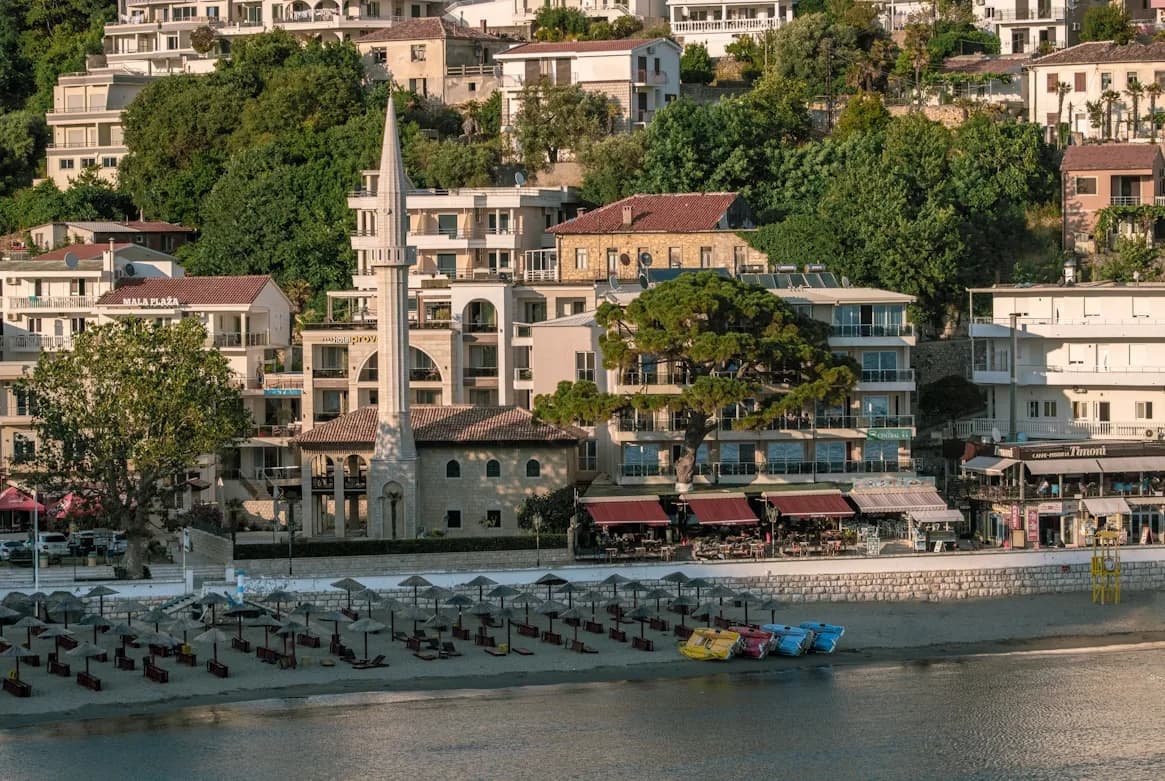
Morning: Coffee and a stroll through the Old Town lanes and viewpoints, then amble down to Mala Plaža for a first dip. If it’s already crowded, continue 10–15 minutes to Liman I or Liman II for calmer coves.
Midday: Drive or taxi to Valdanos (winding road through ancient olive groves) for deep, glassy water and pebble shoreline—ideal for snorkelling. Bring water shoes for sea urchins and shade under the olives; a picnic here beats the midday heat.
Afternoon: Linger at Valdanos for unhurried swims; the bay is sheltered from winds and stays clear even when elsewhere is choppy. Off-season (Oct–Apr), it’s a superb coastal walk with dramatic light and almost no crowds.
Evening: Return to town for the korzo along the Mala Plaža promenade—dress light, join the flow, and grab gelato. Parking is tight in peak season; leave the car farther out or take an inexpensive local taxi.
Day 2: Velika Plaža and the kitesurfing coast
Today is all about Ulcinj’s 12 km sandy showpiece and its wind-driven culture. You’ll sample both busy beach clubs and quieter stretches as the afternoon Maestral fills the sky with kites.
Morning: Head early to the southern half of Velika Plaža (towards Safari Beach and the rustic camps) for space and softer vibes; sunbed sets run roughly €10–€25 and parking €3–€5. The dark sand heats fast—flip-flops right to the water.
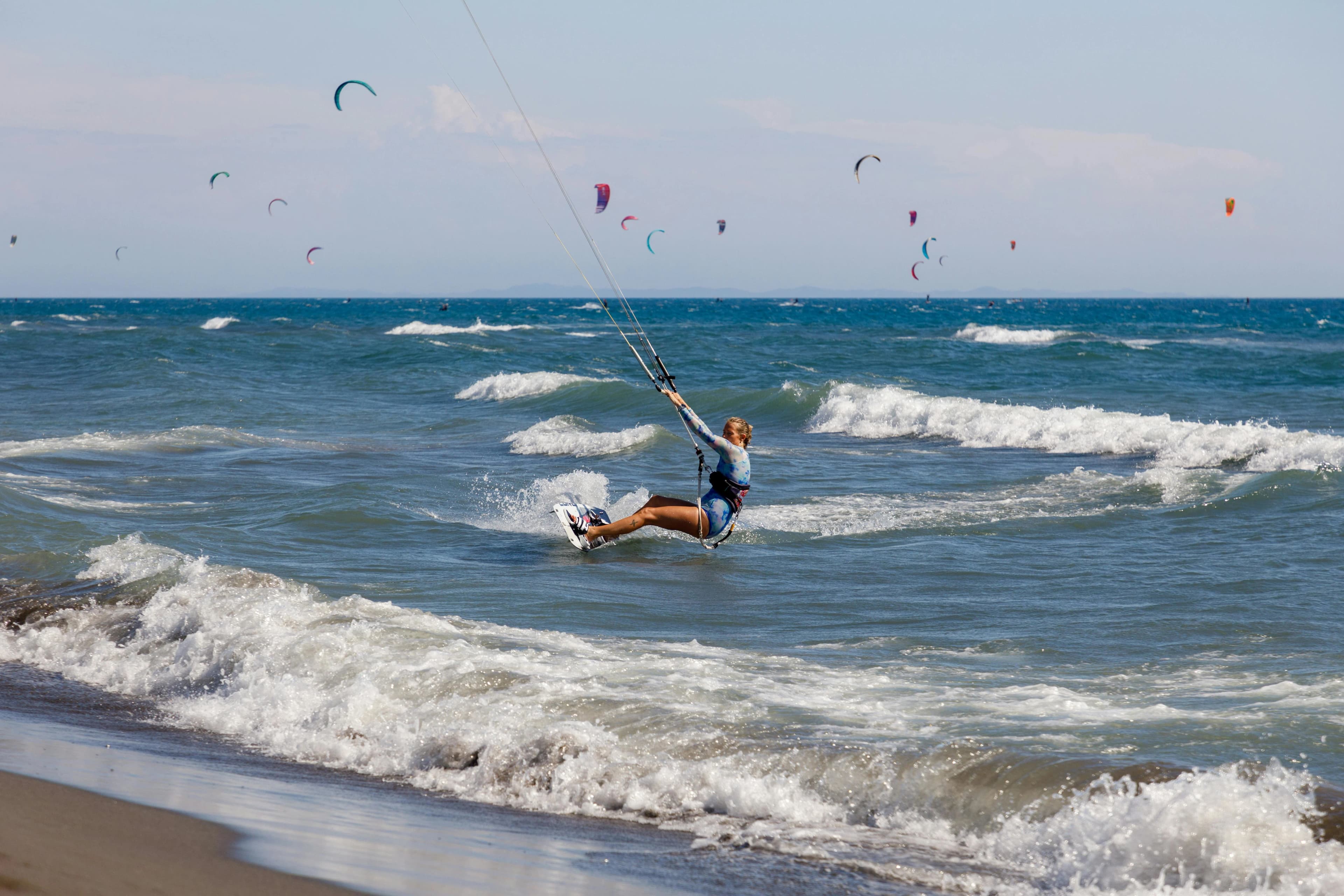
Midday: Join the kitesurfing scene in the central sections (e.g., Dolcinium Kite Club) to book a lesson or watch pros when the wind builds. Full beginner courses run ~€300–€450; short tasters are often available—hydrate and use high SPF.
By Air
Podgorica (TGD) – the nearest major airport; about 75–85 km. Driving time 1 hr 20 min–1 hr 45 min via the Sozina tunnel to Bar, then south to Ulcinj. Regular buses run Podgorica–Ulcinj (typically 1 hr 30 min–2 hr).
Tivat (TIV) – around 90–110 km. Allow 1 hr 45 min–2 hr 45 min (longer in July–August due to coastal traffic via Budva/Bar). Limited direct buses; most travellers connect via Bar or Budva.
Tirana (TIA), Albania – roughly 140–160 km via the Hani i Hotit/Muriqan–Sukobin border. 2 hr 30 min–3 hr 30 min depending on border queues. Several daily buses/vans via Shkodër.
Dubrovnik (DBV), Croatia – about 150–170 km via the Debeli Brijeg/Karasovići border and the Montenegrin coast. 3.5–5 hr in peak season; buses run via Herceg Novi–Budva–Bar.
By Train
No rail station in Ulcinj. Use Bar or Podgorica on the Belgrade–Bar line.
Bar–Ulcinj: 28–30 km; 35–50 min by bus or taxi.
Podgorica–Ulcinj: 80–90 km; 1 hr 30 min–2 hr by bus. Trains connect Belgrade/Novi Sad–Podgorica/Bar year-round (Bar and Podgorica have multiple daily services; seasonal variations apply).
By Bus
Ulcinj Bus Station (Autobuska stanica Ulcinj) has frequent services along the coast and inland.
Ulcinj is the Adriatic’s spacious south-coast escape—lighter on crowds, rich in sand, culture and value.
Atmosphere: A lived-in coastal town where Stari Grad towers over Mala Plaža; evenings drift into the korzo promenade and low-key beach lounges instead of crush-and-flash scenes.
Beaches & wild spaces: Spread out on 12 km of Velika Plaža (kitesurfing heaven on Maestral winds), go naturist on Ada Bojana, or snorkel Valdanos’ pebble bay framed by ancient olive groves.
Flavours & value: Dine in sojenice—stilt-house fish restaurants on the Bojana River—then sample Valdanos olive oil and flaky burek; sunbeds, parking and meals are sensibly priced versus glitzier coasts.
Traditions & authenticity: Feel the Albanian–Montenegrin blend, from family Sundays on the sand to the ladies-only Ženska Plaža springs; etiquette matters (no photography on Ada), hospitality comes naturally.
Ulcinj suits travellers who want big nature and living history in one compact seaside base—think 12 km of dark sandy beach, riverside sunsets and a cliff‑top Old Town. It’s ideal if you prefer sandy strands (a rarity on the mostly rocky Adriatic) and a multicultural vibe shaped by Albanian, Ottoman and Venetian heritage. From kitesurfers and naturists to families and food lovers, there’s more space here than many better‑known Mediterranean resorts.
History lovers: Climb the Old Town walls, trace pirate legends and the Cervantes tale, and wander ancient olive groves at Valdanos.
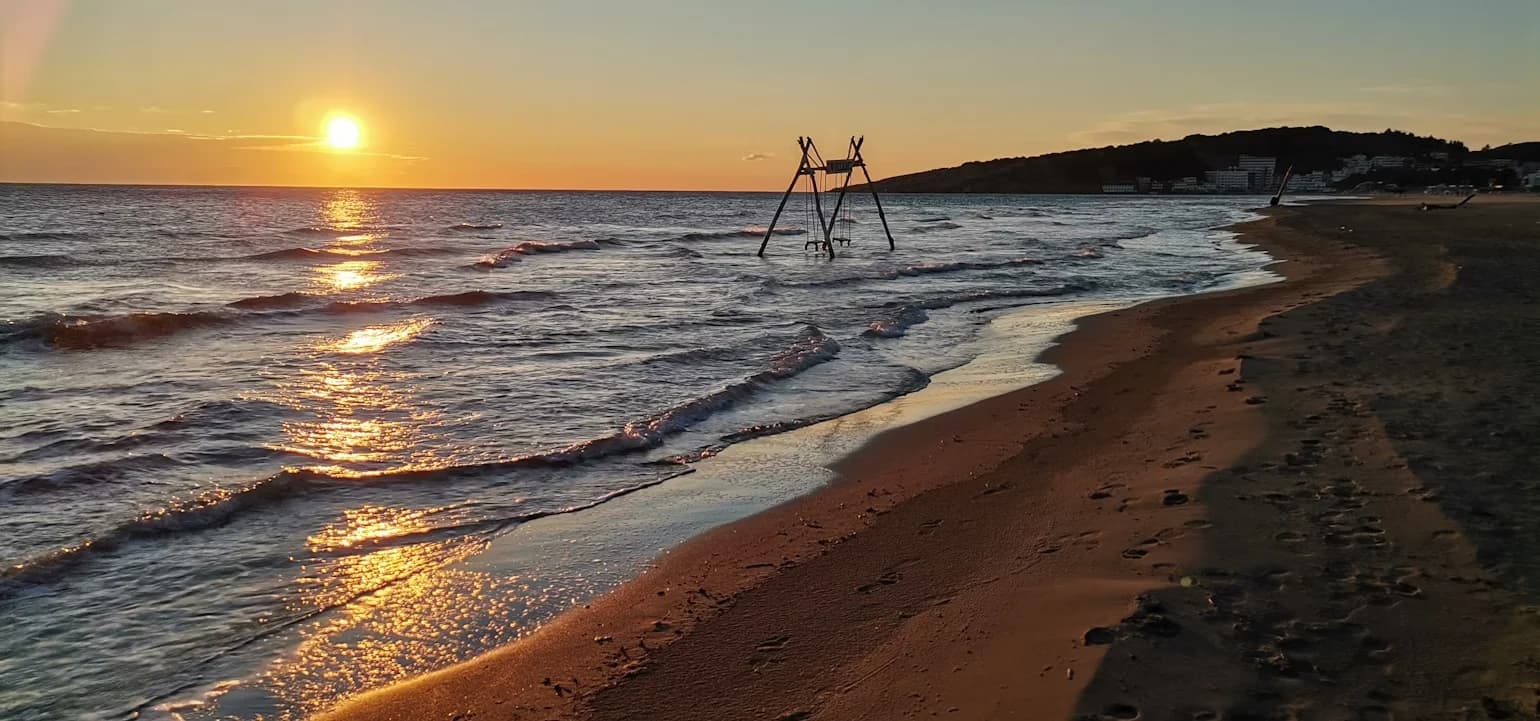
Scenery seekers: Watch fiery sunsets where the Bojana River meets the sea, roam the 12 km sands of Velika Plaža, and swim in Valdanos’ crystal‑clear pebble bay.
Active travellers: Ride reliable Maestral winds at a premier European kitesurf spot, or paddle, cycle and run along endless flat sands.
Families: Enjoy shallow, sheltered Mala Plaža plus lifeguarded sections and wide sandy space—especially relaxed and better value in the shoulder seasons.
Foodies: Feast on just‑caught fish at Bojana’s stilt‑house restaurants and sample local olive oil from centuries‑old groves.
Wellness & naturists: Try warm, mineral‑rich black sand therapy; women can bathe at the sulphur springs of Ženska Plaža; and naturists have the iconic FKK resort on Ada Bojana (strict etiquette applies).
These are the unmissable highlights of Ulcinj. Use them to experience the town’s best beaches, scenery, and local culture.
Walk the 12 km sweep of Velika Plaža, from lively Copacabana to rustic stretches near Ada Bojana.
Explore Ada Bojana’s naturist sea beach and stilt-house fish restaurants at sunset.
Visit Valdanos Bay for pebble swimming, crystal water, and ancient olive groves.
Take a kitesurfing lesson on Velika Plaža where the Maestral wind kicks up each afternoon.
Hike the pine-fringed coastal path from Mala Plaža past Liman coves and Albatros cliffs for swims and views.
These are the unmissable highlights of Ulcinj. Use them to experience the town’s best beaches, scenery, and local culture.
Walk the 12 km sweep of Velika Plaža, from lively Copacabana to rustic stretches near Ada Bojana.
Explore Ada Bojana’s naturist sea beach and stilt-house fish restaurants at sunset.
Visit Valdanos Bay for pebble swimming, crystal water, and ancient olive groves.
Take a kitesurfing lesson on Velika Plaža where the Maestral wind kicks up each afternoon.
Hike the pine-fringed coastal path from Mala Plaža past Liman coves and Albatros cliffs for swims and views.
Ulcinj’s food culture blends Albanian, Ottoman and Montenegrin coastal traditions: just-caught seafood, river specialities, and olive oil from ancient Valdanos groves. Expect simple grilling, wood-smoke and citrus, served in stilt-house eateries on the Bojana or easygoing seafront cafés.
Grilled Adriatic fish (sea bream/sea bass) – Simply chargrilled with local olive oil, lemon and sea salt; the pure taste of the coast. Best enjoyed at stilt-house restaurants on Ada Bojana or relaxed beach cafés.
Black cuttlefish risotto (crni rižot) – Inky, savoury rice with cuttlefish, garlic and white wine; a classic along the Adriatic. Order it at seafront cafés and Old Town terraces at sunset.
Byrek/Burek – Flaky pastry stuffed with cheese, spinach or minced meat; ideal for a quick bite between swims. Grab warm slices from corner bakeries and the morning green market.
Rakija and Vranac wine – Fiery fruit brandy and Montenegro’s signature robust red; a perfect aperitif-and-dinner combo. Sip in casual promenade bars or mellow beach lounges after the evening korzo.
Choosing where to stay in Ulcinj is about picking the right area—each part of the coast has a distinct vibe and daily rhythm. Decide if you want history and cafés, family-friendly sands, a kitesurf hub, or a quiet nature retreat, then choose any hotel within that zone.
Old Town & Mala Plaža — atmospheric stone lanes under the fortress and a lively evening promenade; ideal for history lovers and café-hoppers, but expect summer crowds, steps and scarce parking.
Velika Plaža — 12 km of fine dark sand; north/centre are lively with organised clubs and kitesurfing, while the south is calmer and cheaper; suits families, beach-bar fans and watersports.
Ada Bojana — bohemian river-island with FKK culture, wild sea beach and stilt-house fish restaurants; perfect for free-spirited couples and sunset seekers who respect naturist etiquette.
Valdanos — tranquil pebble bay amid ancient olive groves, deep clear water and minimal nightlife; best for nature lovers and swimmers with a car seeking peace.
Choosing where to stay in Ulcinj is about picking the right area—each part of the coast has a distinct vibe and daily rhythm. Decide if you want history and cafés, family-friendly sands, a kitesurf hub, or a quiet nature retreat, then choose any hotel within that zone.
Old Town & Mala Plaža — atmospheric stone lanes under the fortress and a lively evening promenade; ideal for history lovers and café-hoppers, but expect summer crowds, steps and scarce parking.
Velika Plaža — 12 km of fine dark sand; north/centre are lively with organised clubs and kitesurfing, while the south is calmer and cheaper; suits families, beach-bar fans and watersports.
Ada Bojana — bohemian river-island with FKK culture, wild sea beach and stilt-house fish restaurants; perfect for free-spirited couples and sunset seekers who respect naturist etiquette.
Valdanos — tranquil pebble bay amid ancient olive groves, deep clear water and minimal nightlife; best for nature lovers and swimmers with a car seeking peace.
Travel to Ulcinj is straightforward, with good roads and regular buses linking it to the rest of Montenegro, and most daily needs easy to sort on arrival. A few practical details on costs, getting around, language and timing will help you plan a smoother, more relaxing stay.
Affordability: Moderate by Adriatic standards—expect beach-bar beer €3–4 and pizza €10–15, sunbeds €10–25 per set (parking €3–5), with best-value accommodation in guesthouses/apartments outside July–August.
Transport: The centre around Mala Plaža and the Old Town is walkable, but Velika Plaža, Ada Bojana and Valdanos are easiest by car or taxi (summer minibuses and occasional boat shuttles run), and regional buses connect Ulcinj with Bar, Budva and Podgorica for easy day trips.
Language: Albanian and Montenegrin/Serbian are commonly spoken, while English is widely understood in tourism, with Italian and German also fairly common.
Safety & comfort: Generally safe and welcoming for families and solo travellers; keep an eye on valuables on crowded beaches, protect against strong sun and currents near the Bojana mouth, expect summer traffic/parking congestion, and respect norms at the Ladies’ Beach (women-only) and FKK Ada.
Crowds: July–August is very busy (especially weekends and the town beach), May–June and September are calmer with warm seas and lower prices, and from late autumn many beach venues close though the coast remains excellent for walks.
Travel to Ulcinj is straightforward, with good roads and regular buses linking it to the rest of Montenegro, and most daily needs easy to sort on arrival. A few practical details on costs, getting around, language and timing will help you plan a smoother, more relaxing stay.
Affordability: Moderate by Adriatic standards—expect beach-bar beer €3–4 and pizza €10–15, sunbeds €10–25 per set (parking €3–5), with best-value accommodation in guesthouses/apartments outside July–August.
Transport: The centre around Mala Plaža and the Old Town is walkable, but Velika Plaža, Ada Bojana and Valdanos are easiest by car or taxi (summer minibuses and occasional boat shuttles run), and regional buses connect Ulcinj with Bar, Budva and Podgorica for easy day trips.
Language: Albanian and Montenegrin/Serbian are commonly spoken, while English is widely understood in tourism, with Italian and German also fairly common.
Safety & comfort: Generally safe and welcoming for families and solo travellers; keep an eye on valuables on crowded beaches, protect against strong sun and currents near the Bojana mouth, expect summer traffic/parking congestion, and respect norms at the Ladies’ Beach (women-only) and FKK Ada.
Crowds: July–August is very busy (especially weekends and the town beach), May–June and September are calmer with warm seas and lower prices, and from late autumn many beach venues close though the coast remains excellent for walks.
Seasonality in Ulcinj is pronounced: summers are hot and lively on its long sandy beaches, while spring and early autumn offer the best balance of warm seas and thinner crowds; winter is quiet with many beach facilities closed. Winds for kitesurfing are most reliable on summer afternoons.
Shoulder Season (May–June & September): Warm to hot, sea comfortably swimmable (especially June and September), lighter crowds, relaxed local vibe and better value.
High Summer (July–August): Hottest weather, sea 24–26°C, peak crowds and prices, energetic beach clubs and festivals; excellent afternoon winds for kitesurfing.
Off‑season (October–April): Mild to cool and changeable, many venues closed; beaches are windswept and peaceful—great for walks and low costs.
Seasonality in Ulcinj is pronounced: summers are hot and lively on its long sandy beaches, while spring and early autumn offer the best balance of warm seas and thinner crowds; winter is quiet with many beach facilities closed. Winds for kitesurfing are most reliable on summer afternoons.
Shoulder Season (May–June & September): Warm to hot, sea comfortably swimmable (especially June and September), lighter crowds, relaxed local vibe and better value.
High Summer (July–August): Hottest weather, sea 24–26°C, peak crowds and prices, energetic beach clubs and festivals; excellent afternoon winds for kitesurfing.
Off‑season (October–April): Mild to cool and changeable, many venues closed; beaches are windswept and peaceful—great for walks and low costs.
Afternoon: Beach-hop by following the coastal road’s signed turn-offs; the further south you go, the more natural and affordable it gets. Try the local sand “therapy” tradition (briefly warming joints under hot sand), but avoid peak sun hours.
Evening: Drive to the Bojana River stilt-house restaurants for sunset fish and chilled river breezes; book ahead in July–August. If you wander to the river mouth, respect currents and avoid swimming where river and sea meet.
Day 3: Ada Bojana and Ulcinj’s healing waters
Close with Ulcinj’s most singular places: the naturist island of Ada Bojana and the sulphur springs of the Women’s Beach. There’s an alternative plan for non-FKK visitors, so everyone finishes on a high.
Morning: Cross to Ada Bojana (small bridge toll may apply; entrance fees subject to change) and walk the sea-facing beach; FKK etiquette is discretion and no photography. If naturism isn’t your thing, choose the wilder southern end of Velika Plaža instead.
Midday: Lunch over the Bojana on a floating restaurant—order the day’s catch and watch kite sails offshore. On breezier days, consider a short SUP/kayak session on the river’s calmer edges; off-season, swap for a long beach walk on Ada’s empty sands.
Afternoon: Women can visit Ženska Plaža for the sulphuric springs in a secluded cove (ladies-only, small fee; the mineral scent is normal). Men can swim off the Albatros hotel’s rocky platforms for deep, clear water—wear water shoes.
Evening: Return to Velika Plaža for a final swim and a laid-back lounge section, or stay on Ada for a sunset that lights up the two river mouths. In shoulder season (May–Jun, Sep), the sea stays warm and crowds thin—the perfect farewell.
Summer frequency increases; buy tickets at the station or online; seat reservations recommended in peak season.
By Car
From Podgorica: E65/E80 through the Sozina tunnel to Bar, then E851 to Ulcinj. Tunnel toll for cars applies.
From the Montenegrin coast (Herceg Novi–Budva–Bar): follow E65/E80/E851 south; expect heavy traffic and delays in July–August.
From Albania: cross at Muriqan–Sukobin (nearest to Shkodër); 25–35 min drive from the border to Ulcinj.
From Croatia: cross at Debeli Brijeg/Karasovići, then continue the coastal route via Budva and Bar.
Parking is available across town and at many beaches; paid lots are common in summer.
By Sea
International ferry Bari (Italy)–Bar (Montenegro) operates seasonally; from Bar it’s 35–50 min by road to Ulcinj.
Private marinas are in Bar and Budva; Ulcinj itself has limited facilities for visiting yachts.
Affiliate links help keep Savler free, at no extra cost to you.
Ulcinj suits travellers who want big nature and living history in one compact seaside base—think 12 km of dark sandy beach, riverside sunsets and a cliff‑top Old Town. It’s ideal if you prefer sandy strands (a rarity on the mostly rocky Adriatic) and a multicultural vibe shaped by Albanian, Ottoman and Venetian heritage. From kitesurfers and naturists to families and food lovers, there’s more space here than many better‑known Mediterranean resorts.
History lovers: Climb the Old Town walls, trace pirate legends and the Cervantes tale, and wander ancient olive groves at Valdanos.
Scenery seekers: Watch fiery sunsets where the Bojana River meets the sea, roam the 12 km sands of Velika Plaža, and swim in Valdanos’ crystal‑clear pebble bay.
Active travellers: Ride reliable Maestral winds at a premier European kitesurf spot, or paddle, cycle and run along endless flat sands.
Families: Enjoy shallow, sheltered Mala Plaža plus lifeguarded sections and wide sandy space—especially relaxed and better value in the shoulder seasons.
Foodies: Feast on just‑caught fish at Bojana’s stilt‑house restaurants and sample local olive oil from centuries‑old groves.
Wellness & naturists: Try warm, mineral‑rich black sand therapy; women can bathe at the sulphur springs of Ženska Plaža; and naturists have the iconic FKK resort on Ada Bojana (strict etiquette applies).
Ulcinj’s food culture blends Albanian, Ottoman and Montenegrin coastal traditions: just-caught seafood, river specialities, and olive oil from ancient Valdanos groves. Expect simple grilling, wood-smoke and citrus, served in stilt-house eateries on the Bojana or easygoing seafront cafés.
Grilled Adriatic fish (sea bream/sea bass) – Simply chargrilled with local olive oil, lemon and sea salt; the pure taste of the coast. Best enjoyed at stilt-house restaurants on Ada Bojana or relaxed beach cafés.
Black cuttlefish risotto (crni rižot) – Inky, savoury rice with cuttlefish, garlic and white wine; a classic along the Adriatic. Order it at seafront cafés and Old Town terraces at sunset.
Byrek/Burek – Flaky pastry stuffed with cheese, spinach or minced meat; ideal for a quick bite between swims. Grab warm slices from corner bakeries and the morning green market.
Rakija and Vranac wine – Fiery fruit brandy and Montenegro’s signature robust red; a perfect aperitif-and-dinner combo. Sip in casual promenade bars or mellow beach lounges after the evening korzo.