Share Tarragona with friends and start planning your trip together.
How to get to Tarragona
Have a great tip for Tarragona or another alternative to popular destinations?
Share your thoughts on Tarragona or suggest another authentic alternative to popular destinations. Your tips help others rediscover their love of travelling - while giving popular destinations a little room to breathe.
Please help us keep all core features free to use by using these affiliate links!
Tarragona is perfect if you want ancient history, Mediterranean beaches, and authentic Catalan culture in one easy, walkable city. It’s a calmer, better‑value alternative to Barcelona, with UNESCO Roman sites, lively festivals, and superb seafood. Ideal for weekend city‑breaks, family holidays, or culture‑rich beach escapes.
History lovers: Walk a living Roman capital—amphitheatre by the sea, circus vaults, walls, and top‑tier museums, all within a compact old town.
Festival fans: Time your trip for Santa Tecla, Sant Magí, or Tarraco Viva to see castells, correfocs, and elite Roman reenactments.
Beachgoers & scenery seekers: Swap city bustle for golden‑sand Blue Flag beaches, pine‑framed coves like Cala Fonda (Waikiki), and sunset strolls on the Rambla Nova.
Active travellers: Hike the Camí de Ronda, cycle coastal paths, snorkel clear coves, and day‑trip to the Pont del Diable and El Mèdol quarry.
Foodies: Feast on fresh Serrallo seafood, Roman‑inspired menus during Tàrraco a Taula, and local staples from vermut to espineta amb cargols.
Families: Safe, shallow beaches, human‑tower rehearsals, child‑friendly museums, and easy strolls make a stress‑free base.
Day 1: Roman Tarraco and the Part Alta
Start where Tarragona’s story begins: on the hill of the ancient provincial capital. Today is about orienting yourself among Roman grandeur layered with medieval streets and sea views. Wear good walking shoes; much of the old town is cobbled and hilly.
Morning: Pick up the Passi Monumental at the Praetorium, climb the tower for a city overview, then descend into the Roman circus vaults. Continue along the Passeig Arqueològic beside the Roman walls to see Iberian foundations under Roman ashlar; go early for shade and quieter paths.
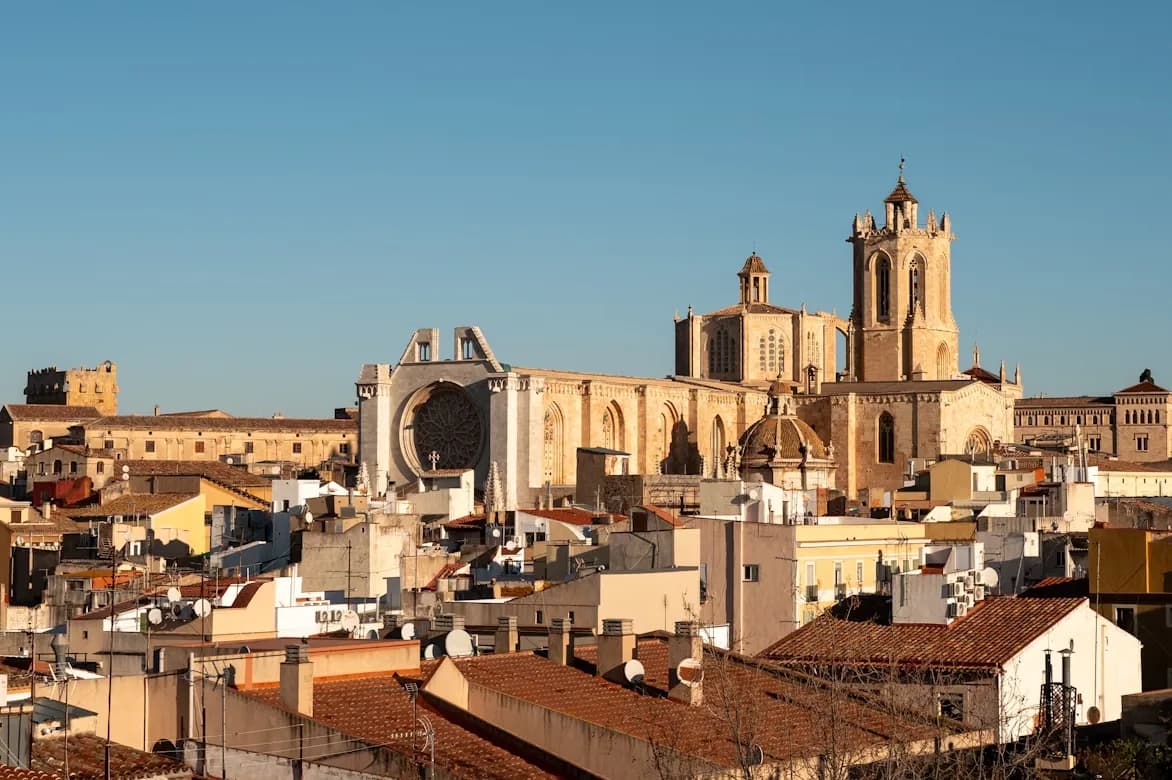
Midday: Visit the Cathedral of Santa Tecla and its cloister (transitional Romanesque-Gothic, built over the Temple of Augustus), then take a leisurely vermut and light lunch around Plaça del Fòrum. If you’re here in May, look out for Tarraco Viva pop-up reenactments in nearby squares.
Afternoon: Walk to the amphitheatre above Platja del Miracle; check the MHT website for current access during restoration—if closed, the best view is from Parc del Miracle or the Balcó del Mediterrani. Stroll the Rambla Nova for gelato and sea breezes.
Evening: Dine in a restaurant tucked into the circus’ stone vaults near Plaça de la Font. On a weekday, drop into a castellers rehearsal (Xiquets de Tarragona or Colla Jove) to watch towers take shape; otherwise stroll the beach for a night swim in summer.
Day 2: Aqueducts, quarries, and the port
Step outside the walls to see the infrastructure that powered Tarraco, then return to the waterfront for museums and fresh fish. Today mixes light hiking with easy urban exploring.
Morning: Bus L5 or drive to the Pont del Diable (Les Ferreres Aqueduct) and walk its top channel (no rail—avoid if you have vertigo); allow 60–90 minutes for the park. If you have a car, add El Mèdol Roman quarry to see the 16 m needle and learn where Tarraco’s golden stone came from.
By Air
Reus (REU) – approx. 12 km. 15–20 min by taxi. Seasonal flights (mainly low-cost/charters). Limited bus links to Tarragona bus station (around 20–30 min; check Autocares Plana schedules).
Barcelona–El Prat (BCN) – approx. 85 km. 55–75 min by car. Direct buses to Tarragona (about 1h15–1h35; Autocares Plana from T1/T2). By train: Rodalies R2 Nord from T2 to Barcelona Sants (≈20 min), then Regional (R14/R15/R16) to Tarragona city (≈1h10–1h30). Fastest: high-speed from Barcelona Sants to Camp de Tarragona (≈30–40 min) + 15–20 min bus/taxi to the centre.
Valencia (VLC) – approx. 250 km. 2.5–3 h by car. Rail options to Camp de Tarragona/Tarragona (≈2h15–3h, Euromed/Intercity/Regional); some long-distance buses (≈3.5–4 h).
Girona–Costa Brava (GRO) – approx. 200 km. 2–2.5 h by car. Rail via Barcelona (change at Sants).
By Train
Stations:
Tarragona (city centre): Regional/Media Distancia services (R14, R15, R16) and some long‑distance.
Camp de Tarragona (high‑speed, ≈15 km from centre): AVE/Avlo/Ouigo; connected by local bus and taxis (≈15–25 min).
From Barcelona:
Regional to Tarragona city: ≈1h10–1h30, every 30–60 min from Sants/Estació de França via Vilanova or via Sant Vicenç.
High‑speed to Camp de Tarragona: ≈30–40 min, frequent daily.
A crowd‑light Mediterranean city where Roman grandeur, Catalan tradition and easy‑going beach life meet—without the big‑name bustle.
Living heritage: Walk a UNESCO Roman capital that’s still lived in—Amphitheatre over the sea, Circus vaults under the Part Alta, and the Cathedral atop Augustus’ temple—minus tour‑bus queues.
Sea & nature: Swap packed promenades for golden‑sand freedom at l’Arrabassada, Platja Llarga and pine‑backed Cala Fonda (via the Camí de Ronda), with breezy views from the Balcó del Mediterrani.
Local life & flavour: El Serrallo’s fish auctions and unfussy seafood, vermut around Plaça del Fòrum, and festival treats like espineta amb cargols—authentic tastes at fair, locals’ prices.
Traditions you can join: Castells rising in Plaça de les Cols, the fire‑lit Santa Tecla Seguici, and Roman‑world Tarraco Viva; fewer barriers, more belonging. Handy value tip: the Passi Monumental covers the key sites, and the Pont del Diable aqueduct is free to roam.
These are the unmissable highlights of Tarragona, distilling two millennia of history and coast into one easy list. Use them to plan a first visit without missing the city’s signature experiences.
Walk the Part Alta and Passeig Arqueològic along the Roman walls, spotting Iberian foundations and medieval houses over the Circus.
Explore the seaside Roman Amphitheatre and the Circus–Praetorium complex, climbing the tower for the best city panorama.
Visit the Cathedral of Santa Tecla on the site of Augustus’s temple and the MNAT collection displayed at Tinglado 4 on the waterfront.
Take a beach day at Platja de l’Arrabassada or wilder Platja Llarga, finishing with sunset at the Balcó del Mediterrani.
Hike the Camí de Ronda through the Bosc de la Marquesa to Cala Fonda (Waikiki), or cross the Pont del Diable aqueduct.
These are the unmissable highlights of Tarragona, distilling two millennia of history and coast into one easy list. Use them to plan a first visit without missing the city’s signature experiences.
Walk the Part Alta and Passeig Arqueològic along the Roman walls, spotting Iberian foundations and medieval houses over the Circus.
Explore the seaside Roman Amphitheatre and the Circus–Praetorium complex, climbing the tower for the best city panorama.
Visit the Cathedral of Santa Tecla on the site of Augustus’s temple and the MNAT collection displayed at Tinglado 4 on the waterfront.
Take a beach day at Platja de l’Arrabassada or wilder Platja Llarga, finishing with sunset at the Balcó del Mediterrani.
Hike the Camí de Ronda through the Bosc de la Marquesa to Cala Fonda (Waikiki), or cross the Pont del Diable aqueduct.
Tarragona eats by the sea and lives in its markets. Expect Mediterranean seafood from the boats of El Serrallo, Catalan staples with romesco, and a proud vermut culture that fills terraces before lunch. Simple, seasonal and deeply local.
Espineta amb cargols – Tuna back with snails, slow‑cooked in a rich tomato‑pepper sauce; a Santa Tecla classic. Best found in homely taverns around the Part Alta during the festes.
Fideuà – Short toasted noodles cooked paella‑style with cuttlefish, prawns and deep fish stock, served with allioli. Ideal for long lunches in El Serrallo’s fishermen’s restaurants or beach xiringuitos.
Calçots amb romesco (in season) – Flame‑charred spring onions dipped in Tarragona’s nutty, peppery romesco sauce. A messy, joyous ritual at market bars and rustic eateries from late winter to early spring.
Vermut & Mamacleta – The pre‑lunch vermouth on ice with an olive, plus the festival favourite Mamacleta (Chartreuse with lemon slush). Sip in lively vermuteries, café terraces and pop‑up bars during Santa Tecla.
Tarragona eats by the sea and lives in its markets. Expect Mediterranean seafood from the boats of El Serrallo, Catalan staples with romesco, and a proud vermut culture that fills terraces before lunch. Simple, seasonal and deeply local.
Espineta amb cargols – Tuna back with snails, slow‑cooked in a rich tomato‑pepper sauce; a Santa Tecla classic. Best found in homely taverns around the Part Alta during the festes.
Fideuà – Short toasted noodles cooked paella‑style with cuttlefish, prawns and deep fish stock, served with allioli. Ideal for long lunches in El Serrallo’s fishermen’s restaurants or beach xiringuitos.
Calçots amb romesco (in season) – Flame‑charred spring onions dipped in Tarragona’s nutty, peppery romesco sauce. A messy, joyous ritual at market bars and rustic eateries from late winter to early spring.
Vermut & Mamacleta – The pre‑lunch vermouth on ice with an olive, plus the festival favourite Mamacleta (Chartreuse with lemon slush). Sip in lively vermuteries, café terraces and pop‑up bars during Santa Tecla.
Choosing where to stay in Tarragona is about matching the area to your trip, not the hotel brand. Each neighbourhood offers a distinct vibe—Roman history, city buzz, or pine-backed beaches—with different pros for access, nightlife and families. Pick your base below.
Part Alta (Old Town) — Roman and medieval heart with cobbled lanes and the Cathedral; best for history lovers and couples; atmospheric but hilly, limited parking, lively during festivals.
Rambla Nova & Centre — flat, modern grid for shops, tapas and transport; ideal for first-timers and short stays; easy walk to the Balcó del Mediterrani and amphitheatre.
L’Arrabassada & Savinosa — sandy Blue-Flag beaches with a promenade and xiringuitos; suits families and beach lovers; quick bus to the centre, parking tight in summer.
Platja Llarga & Tamarit–La Móra — quieter, pine-backed beaches beside a nature reserve; perfect for walkers and those seeking calm; car useful, limited nightlife but stunning Camí de Ronda.
Choosing where to stay in Tarragona is about matching the area to your trip, not the hotel brand. Each neighbourhood offers a distinct vibe—Roman history, city buzz, or pine-backed beaches—with different pros for access, nightlife and families. Pick your base below.
Part Alta (Old Town) — Roman and medieval heart with cobbled lanes and the Cathedral; best for history lovers and couples; atmospheric but hilly, limited parking, lively during festivals.
Rambla Nova & Centre — flat, modern grid for shops, tapas and transport; ideal for first-timers and short stays; easy walk to the Balcó del Mediterrani and amphitheatre.
L’Arrabassada & Savinosa — sandy Blue-Flag beaches with a promenade and xiringuitos; suits families and beach lovers; quick bus to the centre, parking tight in summer.
Platja Llarga & Tamarit–La Móra — quieter, pine-backed beaches beside a nature reserve; perfect for walkers and those seeking calm; car useful, limited nightlife but stunning Camí de Ronda.
Getting to and around Tarragona is straightforward, with most sights clustered in a compact centre and good rail links along the coast. A few practical details on costs, transport, language and timing will make your trip smoother.
Affordability: Expect café breakfasts €4–7, menu del dia lunches €12–18, mid‑range dinners €20–35 per person; mid‑range hotels are typically €80–140 a night (higher in summer), budget hostels €25–45, and apartments from about €85+.
Transport: The historic centre is very walkable (though hilly and cobbled), EMT buses cover beaches and neighbourhoods, trains serve Barcelona/Reus/PortAventura/Altafulla, and a car helps for outliers like Pont del Diable or Cala Fonda (parking tight in peak season).
Language: Catalan and Spanish are the main languages, with English generally understood in tourism-facing places and younger crowds; a simple “Bon dia” or “Gràcies” goes a long way.
Safety & comfort: It’s a safe, family‑ and solo‑friendly city; use normal big‑city caution for pickpockets in busy areas and festivals, wear good shoes for uneven stones, and plan around midday heat in summer.
Crowds: Peak beach season is June–August and during major festivals (Sant Magí in mid‑August, Santa Tecla around 23 September); spring and autumn are pleasantly busy, while winter is calm with shorter hours but lower prices.
Getting to and around Tarragona is straightforward, with most sights clustered in a compact centre and good rail links along the coast. A few practical details on costs, transport, language and timing will make your trip smoother.
Affordability: Expect café breakfasts €4–7, menu del dia lunches €12–18, mid‑range dinners €20–35 per person; mid‑range hotels are typically €80–140 a night (higher in summer), budget hostels €25–45, and apartments from about €85+.
Transport: The historic centre is very walkable (though hilly and cobbled), EMT buses cover beaches and neighbourhoods, trains serve Barcelona/Reus/PortAventura/Altafulla, and a car helps for outliers like Pont del Diable or Cala Fonda (parking tight in peak season).
Language: Catalan and Spanish are the main languages, with English generally understood in tourism-facing places and younger crowds; a simple “Bon dia” or “Gràcies” goes a long way.
Safety & comfort: It’s a safe, family‑ and solo‑friendly city; use normal big‑city caution for pickpockets in busy areas and festivals, wear good shoes for uneven stones, and plan around midday heat in summer.
Crowds: Peak beach season is June–August and during major festivals (Sant Magí in mid‑August, Santa Tecla around 23 September); spring and autumn are pleasantly busy, while winter is calm with shorter hours but lower prices.
Tarragona follows a Mediterranean rhythm: balmy spring and long, golden autumn bookend a hot, lively beach summer; winter is mild and quiet with shorter hours at some sights. Festival peaks (Tàrraco Viva in May, Santa Tecla in late September, Sant Magí in August) drive crowd surges.
Spring (Apr–May): Pleasant 18–24°C, light-to-moderate crowds, ideal for ruins and coastal walks; Tàrraco Viva adds buzz without peak-season pressure.
High Summer (Jun–Aug): Hot 28–33°C with strong sun, busy beaches and higher prices; late nights, full services, and big events (Sant Joan, Sant Magí).
Autumn (Sep–Oct): Warm 20–27°C and a still-comfortable sea, fewer holidaymakers; Santa Tecla around 23 Sept is vibrant, otherwise relaxed shoulder-season vibes.
Tarragona follows a Mediterranean rhythm: balmy spring and long, golden autumn bookend a hot, lively beach summer; winter is mild and quiet with shorter hours at some sights. Festival peaks (Tàrraco Viva in May, Santa Tecla in late September, Sant Magí in August) drive crowd surges.
Spring (Apr–May): Pleasant 18–24°C, light-to-moderate crowds, ideal for ruins and coastal walks; Tàrraco Viva adds buzz without peak-season pressure.
High Summer (Jun–Aug): Hot 28–33°C with strong sun, busy beaches and higher prices; late nights, full services, and big events (Sant Joan, Sant Magí).
Autumn (Sep–Oct): Warm 20–27°C and a still-comfortable sea, fewer holidaymakers; Santa Tecla around 23 Sept is vibrant, otherwise relaxed shoulder-season vibes.
Tarragona
Midday: Head to El Serrallo, the traditional fishing district, for a seafood lunch; book ahead at weekends. Time your walk by the docks to coincide with the late-afternoon fish auction (check local times as they vary with season).
Afternoon: Visit MNAT’s collection at Tinglado 4 on the Moll de Costa (the main museum is being refurbished), then see the nearby Roman theatre site and the Colonial Forum in the lower town to connect artefacts with place. Easy, flat walking along the waterfront makes this a relaxed cultural loop.
Evening: Sunset along the Moll de Costa promenade, then dinner back in El Serrallo. If you’re here in May, Tarraco Viva often programmes evening talks or performances; in cooler months, cosy up with a glass of local vermouth on the Rambla.
Day 3: Costa Daurada coves and Tamarit
Finish with Tarragona’s other soul: its golden coast. Choose between easy-access family beaches or a short hike to wild coves; bring water, sun protection, and trainers for the paths.
Morning: For a wilder day, take bus 16 or drive to Platja Llarga and follow the Camí de Ronda through the Bosc de la Marquesa to Cala Fonda (Waikiki) in 15–20 minutes (naturist etiquette: photos are a no-go; keep it discreet). Prefer easy access? Opt for L’Arrabassada’s Blue Flag bay with ramps and amenities.
Midday: Picnic under pines behind Platja Llarga or eat at a xiringuito (summer only; prices higher than in town). Midday heat is strong June–August—swim, rest, shade.
Afternoon: Continue the path to Cala Jovera for the postcard view beneath Tamarit Castle, then on to Platja de Tamarit; return by bus/taxi if you’ve gone one-way. History lovers can add the Roman villa of Els Munts (near Altafulla) for mosaics and sea views.
Evening: Back in town, time your plans to the season: in late September, Santa Tecla’s Seguici Popular, castells in Plaça de les Cols, and the correfoc (wear cotton, cover up); mid-August brings Sant Magí’s water-centred events; winter features Carnival parades and Holy Week processions. Otherwise, graze tapas around Plaça del Rei and Carrer Merceria and toast the trip with local Chartreuse and lemon granissat.
From Madrid (Puerta de Atocha–Almudena Grandes): AVE/Avlo/Ouigo to Camp de Tarragona ≈2h15–2h45.
From Valencia/Castelló: Euromed/Intercity/Regional to Camp de Tarragona or Tarragona city ≈2h15–3h.
From Zaragoza/Delicias: AVE to Camp de Tarragona ≈1 h.
By Bus
Main terminal: Estació d’Autobusos (Carrer Pere Martell, near Plaça Imperial Tàrraco).
Barcelona Airport (T1/T2) and Barcelona city: frequent direct services by Autocares Plana to Tarragona (≈1h15–1h45).
Costa Daurada links: very frequent local buses (Plana) to Salou, Cambrils, La Pineda and Reus.
Southbound/Valencian Community: Hife (and other operators) towards Terres de l’Ebre, Castelló and València (check timetables).
By Car
Main routes: AP‑7 (coast, toll‑free), A‑7 (local dual carriageway), AP‑2/A‑2 from Zaragoza/Lleida, N‑340 (coast road).
Approximate drive times: Barcelona ≈1–1h15 (≈100 km); Zaragoza ≈2h15 (≈230 km); Valencia ≈2.5–3 h (≈250 km); Reus ≈20 min (≈14 km).
Parking: restricted access in the Part Alta (Old Town). Use central car parks around Rambla Nova/Avinguda Catalunya or edge‑of‑centre parking and walk.
Affiliate links help keep Savler free, at no extra cost to you.
Tarragona is perfect if you want ancient history, Mediterranean beaches, and authentic Catalan culture in one easy, walkable city. It’s a calmer, better‑value alternative to Barcelona, with UNESCO Roman sites, lively festivals, and superb seafood. Ideal for weekend city‑breaks, family holidays, or culture‑rich beach escapes.
History lovers: Walk a living Roman capital—amphitheatre by the sea, circus vaults, walls, and top‑tier museums, all within a compact old town.
Festival fans: Time your trip for Santa Tecla, Sant Magí, or Tarraco Viva to see castells, correfocs, and elite Roman reenactments.
Beachgoers & scenery seekers: Swap city bustle for golden‑sand Blue Flag beaches, pine‑framed coves like Cala Fonda (Waikiki), and sunset strolls on the Rambla Nova.
Active travellers: Hike the Camí de Ronda, cycle coastal paths, snorkel clear coves, and day‑trip to the Pont del Diable and El Mèdol quarry.
Foodies: Feast on fresh Serrallo seafood, Roman‑inspired menus during Tàrraco a Taula, and local staples from vermut to espineta amb cargols.
Families: Safe, shallow beaches, human‑tower rehearsals, child‑friendly museums, and easy strolls make Tarragona a stress‑free base.