Share Sardinia with friends and start planning your trip together.
How to get to Sardinia
Have a great tip for Sardinia or another alternative to popular destinations?
Share your thoughts on Sardinia or suggest another authentic alternative to popular destinations. Your tips help others rediscover their love of travelling - while giving popular destinations a little room to breathe.
Please help us keep all core features free to use by using these affiliate links!
Day 1: Cagliari, Poetto and the south-east coast
Begin in the island’s capital to feel the contrast between urban life and the sea. You’ll glimpse flamingos in city wetlands, then curve along one of Sardinia’s most scenic coasts to the protected waters of Capo Carbonara.
Morning: Stroll Cagliari’s historic Castello and Stampace districts for coffee and views from Bastione di Saint Remy; greet locals with a simple “buongiorno”. Roll down to Poetto beach and the Sella del Diavolo headland; if the Mistral is blowing, the air will be crystal-clear and the water choppy.
Midday: Hire bikes and follow the flat paths through Parco Molentargius-Saline to see greater flamingos; bring water and a hat. Light lunch at a beach chiosco (try pane frattau or a simple octopus salad).
Afternoon: Drive 1 hr to Villasimius for the Capo Carbonara Marine Protected Area: swim or snorkel at Porto Giunco and Punta Molentis. In July–August arrive after 16:00 for easier parking and softer light; avoid trampling posidonia on the shoreline.
Evening: Return to Cagliari for an aperitivo in Marina, then dinner in Stampace (malloreddus, bottarga, seadas). If it’s breezy, choose a sheltered terrace; book ahead at weekends.
Day 2: Barbagia villages and the Supramonte
Head inland to Sardinia’s “stone” heart for masks, murals and mountain silence. Today is about pace and people: observe reserve, greet elders, and let lunch run long.
Morning: Drive 2–2.5 hrs to Mamoiada; visit the Museo delle Maschere Mediterranee to understand the Mamuthones. Seasonal note: in winter (Jan–Feb) village bonfires and carnival rituals electrify the streets—dress warmly and keep a respectful distance.
By Air
Cagliari Elmas (CAG) – main gateway in the south
To Cagliari centre: 7 min by regional train (every ~20–30 min), 10–15 min by taxi.
Sample flight times: Rome 55–60 min; Milan 1h–1h20; London ~2h30.
Olbia Costa Smeralda (OLB) – best for Costa Smeralda/Gallura
To Olbia centre: ~10 min by bus/taxi. Porto Cervo 30–40 min; San Teodoro 25–30 min; Palau ~45 min.
Strong seasonal network from across Europe; year‑round links to Rome/Milan.
To Alghero: ~20–25 min by bus; 15–20 min by taxi. To Sassari: ~35–45 min by bus/rail link.
Mix of year‑round domestic and seasonal international routes.
Notes
Peak (Jun–Sep): more direct flights from major European cities (London, Paris, Berlin, Barcelona, etc.). Book early.
Low season: rely on Rome/Milan connections.
By Ferry
Main Sardinian ports: Olbia, Golfo Aranci, Porto Torres (north); Cagliari (south); Arbatax (east); Santa Teresa Gallura (to/from Corsica).
Key routes (typical durations; day vs overnight vary):
Sardinia delivers the Mediterranean’s knockout beauty with a quieter, deeper rhythm—think world‑class beaches, ancient stone culture, and soul-stirring food, minus the crush.
Atmosphere: A land of “stone and sea” where Nuragic towers (Su Nuraxi di Barumini), silent Barbagia villages, and evening passeggiate set a slower pace. Expect proud Sardità, Orgosolo’s political murals, and Mamoiada’s eerie Mamuthones—authentic rituals you won’t queue for.
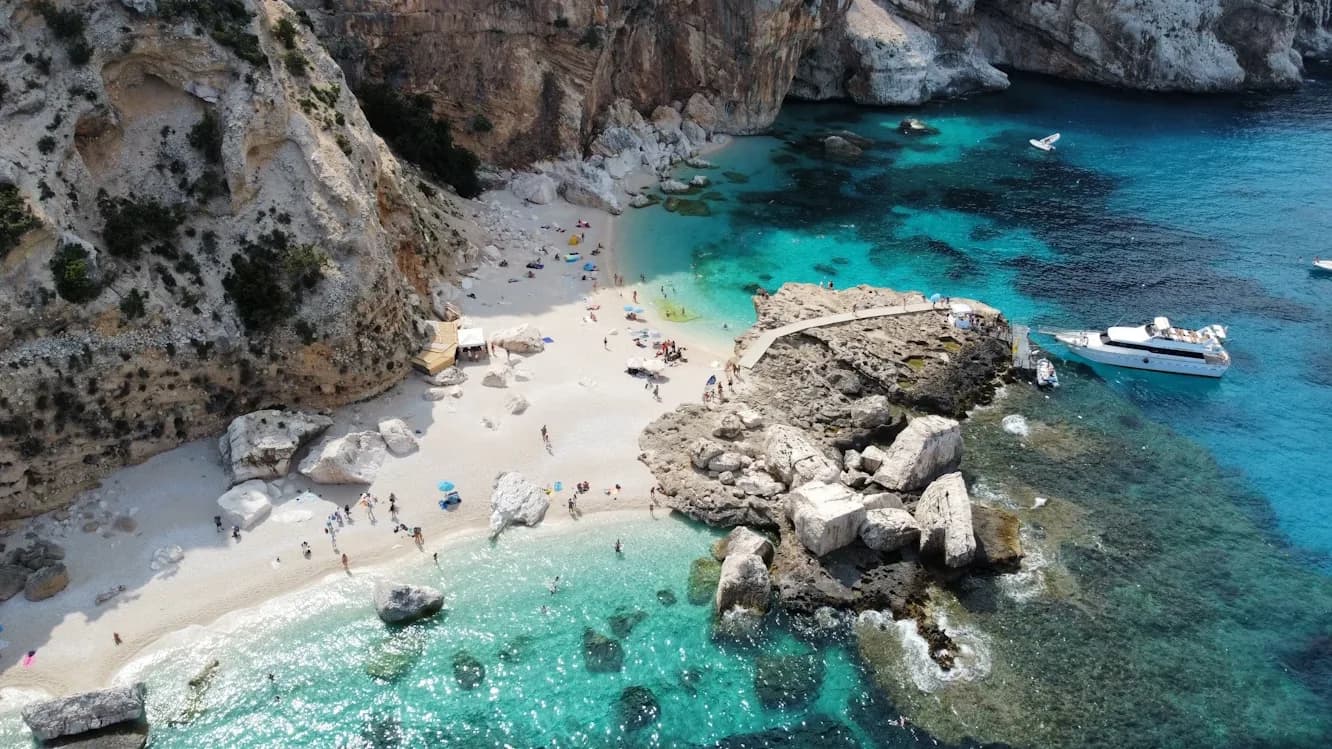
Coast: Luminous coves rival any headline island—La Maddalena’s granite isles, the quartz shimmer of Is Arutas, and Cala Goloritzé’s iconic arch—yet remain calmer in April–June and September–October (book limited-entry beaches with ease). Head here for clear water, space to breathe, and sunset views from Capo Caccia without shoulder‑to‑shoulder crowds.
Wild interior: Hike the Supramonte to Gola di Gorropu or the hidden village of Tiscali, or follow the Cammino Minerario di Santa Barbara past ghostly Laveria Lamarmora. Hire a local guide for backdoor access and stories—adventure here feels personal, uncrowded, and rooted in place.
Food & value: Swap flashy marinas for agriturismi: €35–45 feasts of porceddu, pecorino, pane carasau, Cannonau and homemade mirto, often around Nuoro, Oliena or Fonni. Time your visit for Cortes Apertas (Autunno in Barbagia) to meet artisans, taste family recipes, and experience genuine hospitality at a fraction of big‑name island prices.
Sardinia suits travellers who crave wild nature, ancient culture and a slower, more authentic rhythm. If you love pairing turquoise coves with rugged mountains, or swapping glitzy scenes for lived‑in villages and farm tables, Sardinia delivers. It’s especially rewarding in spring and autumn, when the island breathes and the crowds thin.
History lovers: Explore nuragic towers (Su Nuraxi), Phoenician‑Roman Tharros and haunting mining towns—pre‑Roman heritage unlike anywhere on the mainland.
Scenery seekers: From Supramonte canyons to La Maddalena’s turquoise coves, Sardinia serves Mediterranean drama that’s wilder than the Amalfi Coast.
Active travellers: World‑class hiking (Selvaggio Blu, Gorropu) and cycling (SP71, Alghero–Bosa) shine in shoulder seasons—cooler and far quieter than summer.
Sea & sail lovers: Reliable winds, protected parks (La Maddalena, Capo Carbonara) and glass‑clear water offer island‑hopping more pristine than many Med hotspots.
Food & wine lovers: Agriturismi plate porceddu, pecorino, pane carasau and Cannonau with hospitality more intimate than resort dining.
City‑breakers: Compact Cagliari and Alghero mix Catalan‑tinged old towns, flamingos and beaches—culture and coast without Rome’s crowds.
These are the unmissable highlights of Sardinia, distilling sea, stone and soul into a handful of essential experiences. Use them as anchors for a trip that balances wild interiors with luminous coasts.
Walk the 654 steps of the Escala del Cabirol at Capo Caccia for vertiginous views over Neptune’s Grotto and sheer sea cliffs.
Explore the La Maddalena Archipelago’s granite coves and natural pools by RIB from Palau, swimming in impossibly clear water.
Visit Su Nuraxi di Barumini, the UNESCO‑listed Nuragic fortress‑village that embodies the island’s ancient heart.
Take a day‑boat along the Gulf of Orosei to Cala Mariolu, Cala Luna and Cala Goloritzé, where cliffs plunge into sapphire coves.
Hike into Gola di Gorropu, one of Europe’s deepest canyons, to stand beneath 400‑metre limestone walls in the Supramonte.
These are the unmissable highlights of Sardinia, distilling sea, stone and soul into a handful of essential experiences. Use them as anchors for a trip that balances wild interiors with luminous coasts.
Walk the 654 steps of the Escala del Cabirol at Capo Caccia for vertiginous views over Neptune’s Grotto and sheer sea cliffs.
Explore the La Maddalena Archipelago’s granite coves and natural pools by RIB from Palau, swimming in impossibly clear water.
Visit Su Nuraxi di Barumini, the UNESCO‑listed Nuragic fortress‑village that embodies the island’s ancient heart.
Take a day‑boat along the Gulf of Orosei to Cala Mariolu, Cala Luna and Cala Goloritzé, where cliffs plunge into sapphire coves.
Hike into Gola di Gorropu, one of Europe’s deepest canyons, to stand beneath 400‑metre limestone walls in the Supramonte.
Sardinian food blends the island’s pastoral heartland with its wild coasts: simple ingredients, bold flavours, time‑honoured methods. Think long, unhurried meals, handmade pasta, and wines poured with quiet pride.
Porceddu – spit‑roasted suckling pig perfumed with myrtle; crackling skin and tender meat cooked over wood embers. Atmosphere: shared platters at countryside agriturismi; smoky and convivial.
Culurgiones – hand‑plaited ravioli filled with potato, mint and pecorino, served with tomato sauce or browned butter. Atmosphere: family trattorie in mountain towns; low‑lit and unhurried.
Seadas – fried pastry filled with young pecorino, drenched in local honey for a hot, sweet‑savoured finish. Atmosphere: ordered late in village bars or pasticcerie; warm chatter after the passeggiata.
Cannonau – robust, sun‑warmed red wine with dark fruit and herb notes; perfect with roasted meats and aged pecorino. Atmosphere: poured in small wine bars and at festas; locals toast with a quiet “ajò!”.
Sardinian food blends the island’s pastoral heartland with its wild coasts: simple ingredients, bold flavours, time‑honoured methods. Think long, unhurried meals, handmade pasta, and wines poured with quiet pride.
Porceddu – spit‑roasted suckling pig perfumed with myrtle; crackling skin and tender meat cooked over wood embers. Atmosphere: shared platters at countryside agriturismi; smoky and convivial.
Culurgiones – hand‑plaited ravioli filled with potato, mint and pecorino, served with tomato sauce or browned butter. Atmosphere: family trattorie in mountain towns; low‑lit and unhurried.
Seadas – fried pastry filled with young pecorino, drenched in local honey for a hot, sweet‑savoured finish. Atmosphere: ordered late in village bars or pasticcerie; warm chatter after the passeggiata.
Cannonau – robust, sun‑warmed red wine with dark fruit and herb notes; perfect with roasted meats and aged pecorino. Atmosphere: poured in small wine bars and at festas; locals toast with a quiet “ajò!”.
Choosing where to stay in Sardinia is about picking the right base—the island is large and each area has a distinct vibe. Decide whether you want glam beaches, wild hikes, historic cities or stone‑still mountain villages, then plan day trips from there.
Costa Smeralda — ultra‑polished coves, luxury marinas and high prices in Jul–Aug; perfect for beach‑club hopping, sailing and day trips to La Maddalena.
Gulf of Orosei (Cala Gonone & Baunei) — wild limestone coast with boat‑only coves (Cala Goloritzé, Cala Mariolu) and big hikes (Gorropu, Selvaggio Blu); best for active travellers.
Cagliari & South‑East (Villasimius/Chia) — lively historic city plus white‑sand beaches and flamingos at Molentargius; ideal for first‑timers and city‑and‑sea breaks.
Barbagia (Nuoro, Oliena, Orgosolo) — rugged interior of agriturismi, festivals and deep tradition; suits culture‑seekers who want authenticity over sea views.
Choosing where to stay in Sardinia is about picking the right base—the island is large and each area has a distinct vibe. Decide whether you want glam beaches, wild hikes, historic cities or stone‑still mountain villages, then plan day trips from there.
Costa Smeralda — ultra‑polished coves, luxury marinas and high prices in Jul–Aug; perfect for beach‑club hopping, sailing and day trips to La Maddalena.
Gulf of Orosei (Cala Gonone & Baunei) — wild limestone coast with boat‑only coves (Cala Goloritzé, Cala Mariolu) and big hikes (Gorropu, Selvaggio Blu); best for active travellers.
Cagliari & South‑East (Villasimius/Chia) — lively historic city plus white‑sand beaches and flamingos at Molentargius; ideal for first‑timers and city‑and‑sea breaks.
Barbagia (Nuoro, Oliena, Orgosolo) — rugged interior of agriturismi, festivals and deep tradition; suits culture‑seekers who want authenticity over sea views.
Sardinia is straightforward to visit, with reliable services, friendly locals and a pace that invites you to slow down. A few planning details—season, transport and where you base yourself—make a big difference to cost and experience. Here’s what to know at a glance.
Affordability: Expect casual meals from about €15–€25, hearty agriturismo set menus at €35–€45, and double rooms around €70–€120 inland (summer coastal hotspots, especially the north-east, can jump to €250+).
Transport: Town centres are walkable, but to reach beaches and villages a car is near-essential (buses are limited, trains link main cities, and ferries run to islands like La Maddalena and Asinara).
Language: Italian is standard (with local Sardinian variants) and English is common in tourist areas but rarer inland, so a few Italian phrases go a long way.
Safety & comfort: It’s very safe and welcoming for families and solo travellers; main cautions are summer heat/dehydration, winding mountain roads, and standard petty theft awareness on busy beaches.
Crowds: July–August are peak (especially Costa Smeralda and famous coves), while April–June and September–October are ideal; in high season some top beaches require advance booking with daily caps.
Sardinia is straightforward to visit, with reliable services, friendly locals and a pace that invites you to slow down. A few planning details—season, transport and where you base yourself—make a big difference to cost and experience. Here’s what to know at a glance.
Affordability: Expect casual meals from about €15–€25, hearty agriturismo set menus at €35–€45, and double rooms around €70–€120 inland (summer coastal hotspots, especially the north-east, can jump to €250+).
Transport: Town centres are walkable, but to reach beaches and villages a car is near-essential (buses are limited, trains link main cities, and ferries run to islands like La Maddalena and Asinara).
Language: Italian is standard (with local Sardinian variants) and English is common in tourist areas but rarer inland, so a few Italian phrases go a long way.
Safety & comfort: It’s very safe and welcoming for families and solo travellers; main cautions are summer heat/dehydration, winding mountain roads, and standard petty theft awareness on busy beaches.
Crowds: July–August are peak (especially Costa Smeralda and famous coves), while April–June and September–October are ideal; in high season some top beaches require advance booking with daily caps.
Sardinia follows a Mediterranean rhythm: scorching, crowded summers on the coast, mellow shoulder seasons that reveal the island’s soul, and a raw, contemplative winter ideal for culture and low‑altitude hikes. Sea temps peak late (September), while spring and autumn bring the best balance of weather, value, and access.
Shoulder Season (Apr–Jun & Sep–Oct): Warm, bright days and cooler nights; thinner crowds and better value; ideal for hiking, road trips and sailing, with September offering peak‑warm seas and Autumn village festivals.
High Summer (Jul–Aug): Hottest months with packed beaches, peak prices and traffic; vivid nightlife on the coast, while interiors are quiet at midday; expect access caps/booking for marquee beaches.
Winter (Nov–Mar): Quiet and great value; coastal areas mild but stormy at times, interior can be cold (even snow on peaks); best for culture, festivals and rugged scenery, with some seaside services closed.
Sardinia follows a Mediterranean rhythm: scorching, crowded summers on the coast, mellow shoulder seasons that reveal the island’s soul, and a raw, contemplative winter ideal for culture and low‑altitude hikes. Sea temps peak late (September), while spring and autumn bring the best balance of weather, value, and access.
Shoulder Season (Apr–Jun & Sep–Oct): Warm, bright days and cooler nights; thinner crowds and better value; ideal for hiking, road trips and sailing, with September offering peak‑warm seas and Autumn village festivals.
High Summer (Jul–Aug): Hottest months with packed beaches, peak prices and traffic; vivid nightlife on the coast, while interiors are quiet at midday; expect access caps/booking for marquee beaches.
Winter (Nov–Mar): Quiet and great value; coastal areas mild but stormy at times, interior can be cold (even snow on peaks); best for culture, festivals and rugged scenery, with some seaside services closed.
Midday: Continue 20 min to Orgosolo for the political murales and a slow lunch at an agriturismo (expect home-made pasta and Cannonau). Speak softly, don’t rush—“Sardinian time” is part of the welcome.
Afternoon: Aim for the Supramonte near Oliena (45 min): choose a manageable hike to the karst spring of Su Gologone or towards Tiscali’s hidden village. Wear sturdy shoes and carry 2 litres of water; in summer, start hikes by 16:00 to dodge the heat.
Evening: Stay inland (Oliena/Dorgali/Fonni) at an agriturismo. Accept the post-dinner mirto or filu ’e ferru offered—refusing can seem unfriendly; join the passeggiata in the village before turning in.
Day 3: Gulf of Orosei by boat and cove-hopping
Finish with the “luminous sea”: sheer limestone cliffs, caves and coves seen best from the water. This day pairs effortless beauty with gentle walking or paddling.
Morning: Drive to Cala Gonone (45–60 min from Oliena) and board a boat (group tour or self-drive gommone) for Cala Luna, Cala Mariolu and Cala Sisine; reserve in advance in July–September. If you plan to land-hike to Cala Goloritzé instead, permits are capped—book via the local app the day before.
Midday: Swim and snorkel in calm, clear water; bring reef-safe sunscreen and cash for beach kiosks (or pack a pranzo al sacco). Sand, pebbles and shells are protected—fines are steep for taking them.
Afternoon: Short cave wander at Cala Luna or a SUP/kayak along the cliffs if conditions are gentle. If a strong Mistral is forecast, the east coast is usually calmer, but boats may still be limited—check the evening before.
Evening: Drive 1.5–2 hrs to Olbia (for flights/ferries) or stay a final night in Dorgali/Cala Gonone. Celebrate with a seafood dinner and a glass of Vermentino; in shoulder seasons (May–June, Sept–Oct) you’ll find fewer crowds and warm seas.
Notes on logistics:
A car is essential; mountain and coastal roads are winding—allow extra time.
In peak season, beach access may require pre-booking (e.g., La Pelosa, Cala Brandinchi/Lu Impostu in the north if you add an extra day).
Always greet people you pass in villages, close gates you open on trails, and never anchor (or let skippers anchor) on posidonia meadows.
Affiliate links help keep Savler free, at no extra cost to you.
Sardinia suits travellers who crave wild nature, ancient culture and a slower, more authentic rhythm. If you love pairing turquoise coves with rugged mountains, or swapping glitzy scenes for lived‑in villages and farm tables, Sardinia delivers. It’s especially rewarding in spring and autumn, when the island breathes and the crowds thin.
History lovers: Explore nuragic towers (Su Nuraxi), Phoenician‑Roman Tharros and haunting mining towns—pre‑Roman heritage unlike anywhere on the mainland.
Scenery seekers: From Supramonte canyons to La Maddalena’s turquoise coves, Sardinia serves Mediterranean drama that’s wilder than the Amalfi Coast.
Active travellers: World‑class hiking (Selvaggio Blu, Gorropu) and cycling (SP71, Alghero–Bosa) shine in shoulder seasons—cooler and far quieter than summer.
Sea & sail lovers: Reliable winds, protected parks (La Maddalena, Capo Carbonara) and glass‑clear water offer island‑hopping more pristine than many Med hotspots.
Food & wine lovers: Agriturismi plate porceddu, pecorino, pane carasau and Cannonau with hospitality more intimate than resort dining.
City‑breakers: Compact Cagliari and Alghero mix Catalan‑tinged old towns, flamingos and beaches—culture and coast without Rome’s crowds.