Share Menorca with friends and start planning your trip together.
How to get to Menorca
Have a great tip for Menorca or another alternative to popular destinations?
Share your thoughts on Menorca or suggest another authentic alternative to popular destinations. Your tips help others rediscover their love of travelling - while giving popular destinations a little room to breathe.
Please help us keep all core features free to use by using these affiliate links!
Day 1: South-coast coves and Ciutadella’s old-world charm
Ease into Menorca’s poc a poc rhythm on the postcard-pretty south coast, then drift through Ciutadella’s aristocratic lanes at dusk. Plan around wind: if the Tramuntana (north wind) is blowing, the southern coves are calmer and clearer.
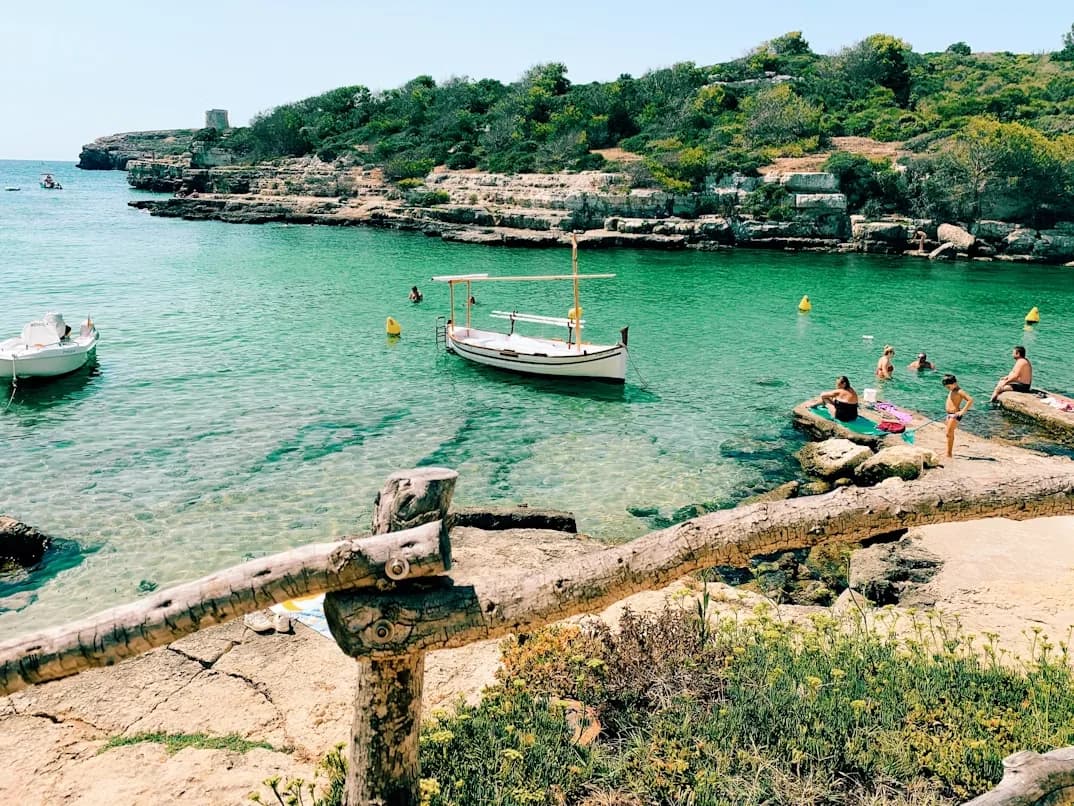
Morning: Park at Cala Galdana and follow the Camí de Cavalls 20 minutes to Cala Mitjana (or continue to tiny Mitjaneta). Wear proper trainers, carry at least 1.5L water per person, and respect the Posidonia seagrass deposits (they protect the beach). In summer, access to Cala Macarella/Macarelleta is by bus from Ciutadella—go early to beat queues.
Midday: Swim and picnic under the pines (there are no services at virgin coves). If the sea is flat, rent a kayak/SUP in Cala Galdana to reach hidden inlets like Trebalúger; if jellyfish flags are up, stick to shaded walks and cove-hopping on foot.
Afternoon: Stroll Ciutadella’s old town (Ses Voltes, Plaça des Born, cathedral) and the pretty harbour. Browse avarques (look for the “Avarca de Menorca” authenticity label) and pause for a vermut or gelat; most small shops close for siesta (roughly 13:30–17:00).
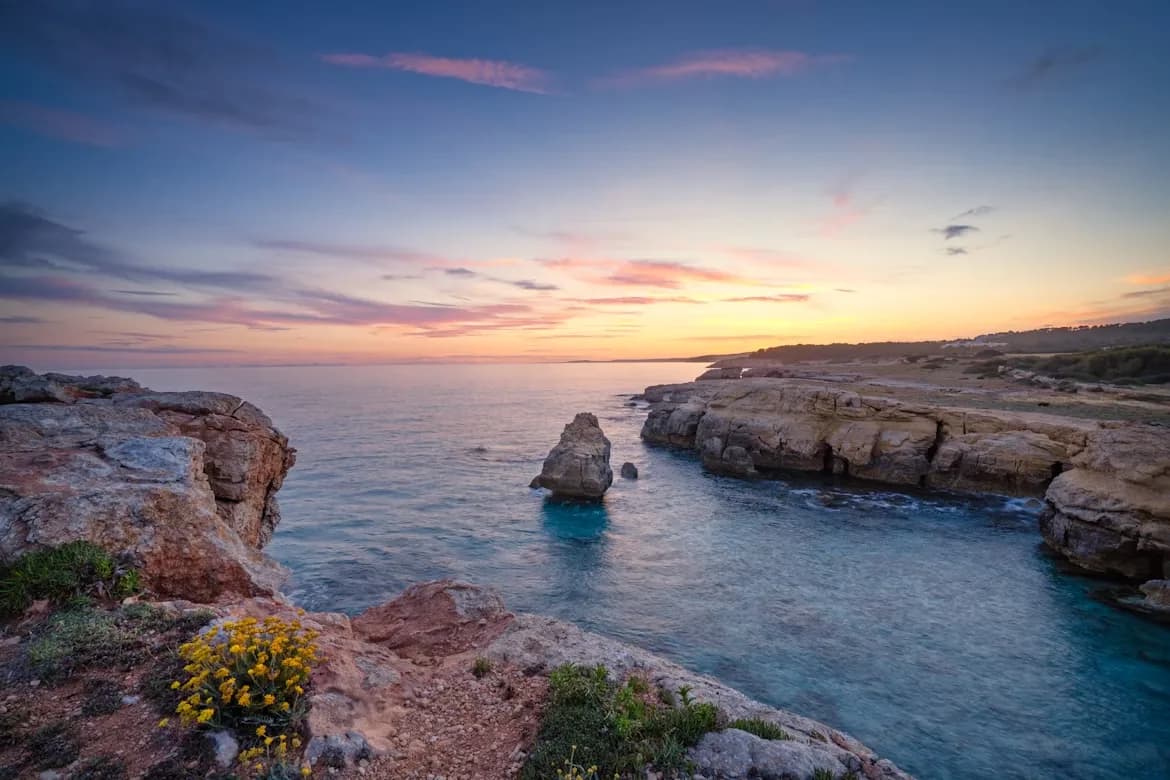
Evening: Sunset at Pont d’en Gil (15–20-minute flat walk; arrive early in July–August) or the wild headland of Punta Nati (bring a windbreaker and a torch for the return). For an easy option, sip a pomada at Sa Posta de Sol over the sea, then dine late on the harbour—book ahead in high season.
Day 2: Menorca’s wild north and Fornells flavours
Today shows Menorca’s rugged Tramuntana face—reddish headlands, big skies, and quiet bays—balanced by a slow seafood lunch in Fornells. If the north wind howls, flip the plan and head south instead.
Morning: Putter around Es Grau village and the S’Albufera des Grau paths, or kayak across to the beaches on Illa d’en Colom (calm, shallow, family-friendly). Bird hides, boardwalks and gentle trails make this the island’s Biosphere heart.
By Air
Menorca Airport (MAH) sits 5 km (10–15 minutes) from Maó and about 45–50 minutes from Ciutadella via the ME-1.
Frequent domestic flights: Barcelona (~50–55 minutes), Palma de Mallorca (~35–40 minutes), Madrid (~1h25), Valencia/Alicante (around 1–1h15; often seasonal).
Seasonal direct flights from many UK and European cities (e.g., London, Manchester, Birmingham, Bristol, Edinburgh, Paris, Milan, Berlin). Typical UK flight times: ~2h15–2h45.
Taxis, pre-booked transfers and local buses connect MAH with major towns and resorts.
By Ferry
Main ports on Menorca: Maó (east) and Ciutadella (west).
From Mallorca: Alcúdia–Ciutadella (high-speed) ~1–1h30; multiple daily services (Balearia/Trasmed).
From Barcelona: to Ciutadella or Maó in ~4–9 hours depending on vessel; daytime and overnight options.
From Valencia: to Maó or Ciutadella typically ~6–9 hours (less frequent than Barcelona).
From Dénia: to Ciutadella (usually seasonal) ~4–5½ hours.
From France: Toulon–Ciutadella (seasonal; overnight) ~10–12 hours (Corsica Ferries).
Foot passengers and vehicles are accepted; advance booking is essential in summer.
By Train
Menorca trades the blare and bottlenecks for crowd‑light calm, yet matches it with harbour cities, pine‑scented coves and quietly lived‑in rural charm.
Vibe: ‘Poc a poc’ tranquillity over hurry—wander Mahón’s Georgian‑tinged harbour and Ciutadella’s limestone lanes, linger over late dinners and a vermut instead of superclub noise.
Nature: A UNESCO Biosphere Reserve with room to breathe—walk the Camí de Cavalls, choose turquoise southern calas like Cala Mitjana or the wild reds of Cala Pregonda, and catch golden hours at lighthouses Favàritx or Punta Nati without the jostle.
Culture: Authentic tastes and makers—Mahón cheese and a pomada at Mercat des Claustre or the Fish Market, caldereta de langosta in Fornells, and artisan avarcas in Ferreries; simple pleasures (hikes, swims, sunsets) deliver standout value.
Traditions: Village festes and the Jaleo with the black Menorcan horse, respectful beach quiet, and stargazing under low‑light skies—real life first, tourism second, with space to savour it.
Menorca suits travellers who prioritise tranquillity, nature and authenticity over crowds and nightlife. It’s ideal if you like to move “poc a poc” (little by little), spending unhurried days between pine-fringed coves, countryside fincas and historic towns. Think a calmer, more sustainable alternative to Ibiza or Mallorca with world-class beaches, walking, sailing and food.
Scenery seekers: Revel in unspoilt vistas—from white-limestone southern coves to the wild, red-hued north—and Starlight-quality skies for dazzling night views.
Beach lovers: Swim in turquoise, Posidonia‑clear waters at virgin calas like Turqueta, Macarella or Pregonda, best enjoyed in shoulder season for peak calm.
Active travellers: Hike the 185 km Camí de Cavalls, kayak Es Grau or Fornells, sail from Maó’s majestic harbour, and dive the northern marine reserve.
History lovers: Explore prehistoric talayots, taules and navetes, British‑era Maó with Georgian touches, cliff‑top lighthouses and the mighty La Mola fortress.
Foodies: Taste D.O. Mahón‑Menorca cheese, Fornells’ caldereta de langosta, rustic sobrasada and a sunset pomada (Xoriguer gin + lemonade) at local markets and harbours.
Families & slow travellers: Enjoy exceptional safety, easy logistics, low‑key nights and relaxed inland towns—perfect for long swims, long lunches and life lived slowly on Menorca.
These are the unmissable highlights of Menorca. They capture the island’s slow, sustainable spirit and its most iconic settings.
Walk the Camí de Cavalls to a secluded cala like Macarelleta or Cala Pregonda for a swim in crystalline water.
Explore Ciutadella’s honey-stone old town and harbour at dusk for palaces, arcades and a lingering vermut.
Visit Punta Nati or Cap de Cavalleria lighthouse at sunset for wind-swept cliffs and a blazing Mediterranean horizon.
Take a llaüt, small boat or kayak from Cala Galdana to turquoise coves (Mitjana, Trebalúger, Macarella) for a day on the water.
Hike through S’Albufera des Grau to Far de Favàritx for lunar-black rock, birdlife and Biosphere tranquillity.
These are the unmissable highlights of Menorca. They capture the island’s slow, sustainable spirit and its most iconic settings.
Walk the Camí de Cavalls to a secluded cala like Macarelleta or Cala Pregonda for a swim in crystalline water.
Explore Ciutadella’s honey-stone old town and harbour at dusk for palaces, arcades and a lingering vermut.
Visit Punta Nati or Cap de Cavalleria lighthouse at sunset for wind-swept cliffs and a blazing Mediterranean horizon.
Take a llaüt, small boat or kayak from Cala Galdana to turquoise coves (Mitjana, Trebalúger, Macarella) for a day on the water.
Hike through S’Albufera des Grau to Far de Favàritx for lunar-black rock, birdlife and Biosphere tranquillity.
Menorca eats at the island’s pace: seasonal, sea‑to‑table, and proudly local. Simple recipes perfected over generations meet farmhouse cheeses and fresh catch, shared in harbour taverns and buzzing markets.
Caldereta de Langosta – Menorca’s signature spiny lobster stew, slow‑simmered with tomato, garlic and a splash of brandy; best savoured in Fornells’ waterfront restaurants at sunset.
Mahón–Menorca cheese (DOP) – A nutty, buttery cow’s cheese aged from soft to sharp; sample at morning markets or farm shops with rustic bread and a glass of local wine.
Pomada – Xoriguer gin mixed with cloudy lemonade; the island’s breezy sunset drink for bars and village squares during summer festes.
Mercat del Peix tapas crawl – Stand at marble counters for fresh seafood tapas and a vermut; a lively, no‑frills atmosphere in Mahón’s historic fish market.
Menorca eats at the island’s pace: seasonal, sea‑to‑table, and proudly local. Simple recipes perfected over generations meet farmhouse cheeses and fresh catch, shared in harbour taverns and buzzing markets.
Caldereta de Langosta – Menorca’s signature spiny lobster stew, slow‑simmered with tomato, garlic and a splash of brandy; best savoured in Fornells’ waterfront restaurants at sunset.
Mahón–Menorca cheese (DOP) – A nutty, buttery cow’s cheese aged from soft to sharp; sample at morning markets or farm shops with rustic bread and a glass of local wine.
Pomada – Xoriguer gin mixed with cloudy lemonade; the island’s breezy sunset drink for bars and village squares during summer festes.
Mercat del Peix tapas crawl – Stand at marble counters for fresh seafood tapas and a vermut; a lively, no‑frills atmosphere in Mahón’s historic fish market.
Choosing where to stay in Menorca shapes your whole trip. Pick the area that matches your pace—heritage towns, family-friendly coves, or quiet fishing villages—rather than a specific hotel. Here are four great bases and who they suit.
Ciutadella (Old Town) — Romantic, historic centre of sandstone palaces and cobbled lanes; best for history lovers, dusk strolls, boutique dining, and west‑coast cala day trips.
Maó (Mahón) & Port de Maó — Maritime city with a vast natural harbour and Georgian touches; suits urban comforts, waterside restaurants, boat tours, and east‑coast exploring.
Cala Galdana — Sheltered horseshoe bay with full services; ideal for families and beach‑hoppers, with easy walks/boats to Mitjana, Macarella and the Camí de Cavalls.
Fornells — Whitewashed fishing village on a calm bay; perfect for quiet breaks, beginner wind/water sports, and seafood feasts (caldereta de langosta) on the north coast.
Choosing where to stay in Menorca shapes your whole trip. Pick the area that matches your pace—heritage towns, family-friendly coves, or quiet fishing villages—rather than a specific hotel. Here are four great bases and who they suit.
Ciutadella (Old Town) — Romantic, historic centre of sandstone palaces and cobbled lanes; best for history lovers, dusk strolls, boutique dining, and west‑coast cala day trips.
Maó (Mahón) & Port de Maó — Maritime city with a vast natural harbour and Georgian touches; suits urban comforts, waterside restaurants, boat tours, and east‑coast exploring.
Cala Galdana — Sheltered horseshoe bay with full services; ideal for families and beach‑hoppers, with easy walks/boats to Mitjana, Macarella and the Camí de Cavalls.
Fornells — Whitewashed fishing village on a calm bay; perfect for quiet breaks, beginner wind/water sports, and seafood feasts (caldereta de langosta) on the north coast.
Travel in Menorca is straightforward: compact distances, good roads, and a calm pace. A few local quirks—siesta hours, beach access controls, and wind‑driven beach choice—make planning smoother. Here’s what to know at a glance.
Affordability: Mid‑range mains run €15–25 (beer €3–5), boutique hotels are typically €180–300 per night in summer (rural stays €140–220; simple apartments €100–180), and car hire is ~€35–70/day in shoulder season but higher in August.
Transport: Towns are walkable but to reach coves you’ll want a car or the efficient seasonal beach buses (some beaches and lighthouses are bus‑only in high season), with ferries to Mallorca/Barcelona and frequent flights from mainland Spain.
Language: Catalan (Menorquí) and Spanish are official, but English is widely understood in tourism; a friendly “bon dia” and “gràcies” are appreciated.
Safety & comfort: It’s a very safe, family‑friendly island with low crime—use normal precautions for petty theft in crowds, take care on unfenced cliffs and with sun/heat, and note lifeguards are mainly on developed beaches.
Crowds: July–August are the busiest (popular coves and car parks fill early and some areas have access caps), while May–June and September–October are relaxed sweet spots and winter is peacefully quiet with limited services.
Travel in Menorca is straightforward: compact distances, good roads, and a calm pace. A few local quirks—siesta hours, beach access controls, and wind‑driven beach choice—make planning smoother. Here’s what to know at a glance.
Affordability: Mid‑range mains run €15–25 (beer €3–5), boutique hotels are typically €180–300 per night in summer (rural stays €140–220; simple apartments €100–180), and car hire is ~€35–70/day in shoulder season but higher in August.
Transport: Towns are walkable but to reach coves you’ll want a car or the efficient seasonal beach buses (some beaches and lighthouses are bus‑only in high season), with ferries to Mallorca/Barcelona and frequent flights from mainland Spain.
Language: Catalan (Menorquí) and Spanish are official, but English is widely understood in tourism; a friendly “bon dia” and “gràcies” are appreciated.
Safety & comfort: It’s a very safe, family‑friendly island with low crime—use normal precautions for petty theft in crowds, take care on unfenced cliffs and with sun/heat, and note lifeguards are mainly on developed beaches.
Crowds: July–August are the busiest (popular coves and car parks fill early and some areas have access caps), while May–June and September–October are relaxed sweet spots and winter is peacefully quiet with limited services.
Menorca is markedly seasonal: July–August brings heat and the year’s biggest crowds, while spring and early autumn deliver the sweet spot of warm seas and breathing space. Winter returns the island to its residents—quiet, authentic, and wonderfully slow.
Shoulder Season (May–June & Sept–Oct): Warm (20–28°C), swimmable seas and manageable crowds; everything’s open and the island breathes—perfect for the Camí de Cavalls and tranquil calas.
High Summer (July–August): Hot (28–34°C) and busiest; car parks and famed beaches fill early with some access controls; vibrant festes but the tranquillity can feel stretched.
Winter (Nov–April): Mild to cool (12–18°C), changeable with Tramuntana winds; few tourists and many closures, but superb for walking, birding, and quiet village life.
Menorca is markedly seasonal: July–August brings heat and the year’s biggest crowds, while spring and early autumn deliver the sweet spot of warm seas and breathing space. Winter returns the island to its residents—quiet, authentic, and wonderfully slow.
Shoulder Season (May–June & Sept–Oct): Warm (20–28°C), swimmable seas and manageable crowds; everything’s open and the island breathes—perfect for the Camí de Cavalls and tranquil calas.
High Summer (July–August): Hot (28–34°C) and busiest; car parks and famed beaches fill early with some access controls; vibrant festes but the tranquillity can feel stretched.
Winter (Nov–April): Mild to cool (12–18°C), changeable with Tramuntana winds; few tourists and many closures, but superb for walking, birding, and quiet village life.
Midday: Drive to Fornells for caldereta de langosta (reserve; it’s the village speciality). If that’s too dear or unavailable, try rice with lobster, grilled local fish, and a light pomada; linger by the boats bobbing in the bay.
Afternoon: Walk 30 minutes from Binimel·là to Cala Pregonda for otherworldly red sands, or choose Platja de Cavalleria for an easier-access northern sweep. Bring sturdy footwear, plenty of water, and snorkel around rocky points; skip the clay “mud baths” to protect the headland.
Evening: Catch the sunset from the Cavalleria lighthouse cliffs—vast horizons and big colours (bring a layer; winds can bite). On crisp nights, stargazing is excellent; if conditions are rough, head inland to Es Mercadal’s bakeries and drive up Monte Toro for twilight island-wide views.
Day 3: Mahón harbour, inland makers, and a cliffside farewell
Trace Menorca’s maritime story in one of the Mediterranean’s great natural harbours, meet its makers inland, then toast the island from a cliff cave. Off-season, you’ll swap buzz for deep tranquillity and easy parking.
Morning: Take a Mahón harbour boat tour for fortifications, islets and naval lore, or roam La Mola fortress for commanding views. Pop into the Xoriguer gin distillery for a taste, then graze tapas at the lively Mercat del Peix (afternoons get buzzy outside summer).
Midday: Go inland for lunch in Es Mercadal or visit a farm shop signed “Venda directa de formatge” for Mahón-Menorca cheese. If you’re keen on shoes, check factory outlets in Ferreries/Alaior—but mind siesta hours (typ. 10:00–13:30 and 17:00–20:30).
Afternoon: Wander Líthica Pedreres de s’Hostal, a reclaimed limestone quarry turned labyrinth and garden—cool stone, beautiful light, and calm. Alternatively, walk a quieter Camí de Cavalls stretch near Algaiarens for north-coast panoramas.
Evening: Book the sunset session at Cova d’en Xoroi in Cala en Porter (entry includes a drink; lots of steps; bring a light jacket). Prefer it quieter? Opt for a low-key sunset cruise from Mahón or a harbour-side drink in Ciutadella; remember many cliff spots are unfenced—keep back from edges and carry a torch.
No rail to Menorca (island). Use high-speed/long-distance trains to mainland ferry gateways, then connect to the port:
Madrid–Barcelona Sants ~2h30 (AVE); Sants to Barcelona port ~20–30 minutes by taxi/metro.
Madrid–Valencia Joaquín Sorolla ~1h45 (AVE); station to Valencia port ~15–20 minutes by taxi.
Trains also serve Alicante/Toulon for connections to relevant ferry routes (check seasonal services).
By Car
Drive to mainland ferry ports and take a car ferry to Menorca:
Barcelona port: well signed from city ring roads; crossings to Maó/Ciutadella ~4–9 hours.
Dénia port: seasonal fast services to Ciutadella ~4–5½ hours.
On arrival: Ciutadella–Maó is ~45 km (about 50 minutes) along the ME-1. Major resorts are 15–35 minutes from their nearest port/airport depending on location.
Affiliate links help keep Savler free, at no extra cost to you.
Menorca suits travellers who prioritise tranquillity, nature and authenticity over crowds and nightlife. It’s ideal if you like to move “poc a poc” (little by little), spending unhurried days between pine-fringed coves, countryside fincas and historic towns. Think a calmer, more sustainable alternative to Ibiza or Mallorca with world-class beaches, walking, sailing and food.
Scenery seekers: Revel in unspoilt vistas—from white-limestone southern coves to the wild, red-hued north—and Starlight-quality skies for dazzling night views.
Beach lovers: Swim in turquoise, Posidonia‑clear waters at virgin calas like Turqueta, Macarella or Pregonda, best enjoyed in shoulder season for peak calm.
Active travellers: Hike the 185 km Camí de Cavalls, kayak Es Grau or Fornells, sail from Maó’s majestic harbour, and dive the northern marine reserve.
History lovers: Explore prehistoric talayots, taules and navetes, British‑era Maó with Georgian touches, cliff‑top lighthouses and the mighty La Mola fortress.
Foodies: Taste D.O. Mahón‑Menorca cheese, Fornells’ caldereta de langosta, rustic sobrasada and a sunset pomada (Xoriguer gin + lemonade) at local markets and harbours.
Families & slow travellers: Enjoy exceptional safety, easy logistics, low‑key nights and relaxed inland towns—perfect for long swims, long lunches and life lived slowly on Menorca.