Share Matera with friends and start planning your trip together.
How to get to Matera
Have a great tip for Matera or another alternative to popular destinations?
Share your thoughts on Matera or suggest another authentic alternative to popular destinations. Your tips help others rediscover their love of travelling - while giving popular destinations a little room to breathe.
Please help us keep all core features free to use by using these affiliate links!
Day 1: First encounter with stone and water
Ease into Matera from the modern “piano” before descending into the Sassi. Today is about orientation and the hidden infrastructure that made life here possible.
Morning: Start at Piazza Vittorio Veneto for your first reveal of the Sassi from Belvedere Luigi Guerricchio, then descend to Palombaro Lungo (the vast underground cistern). Book the cistern on busy days; wear firm-grip shoes as polished limestone can be slippery.
Midday: Join a local guided walk through Sasso Barisano to decode doors, gutters and cistern mouths along Via Fiorentini; pause for a light lunch of Matera bread, local cheeses and olives. In summer, keep to shade and refill water often; the ZTL means you’ll be on foot.
Afternoon: Visit Casa Grotta di Vico Solitario for a snapshot of 20th‑century cave life, then explore MUSMA or Casa Cava to see how contemporary culture fits ancient voids. If it rains, the stone gleams and photos pop—just tread carefully.
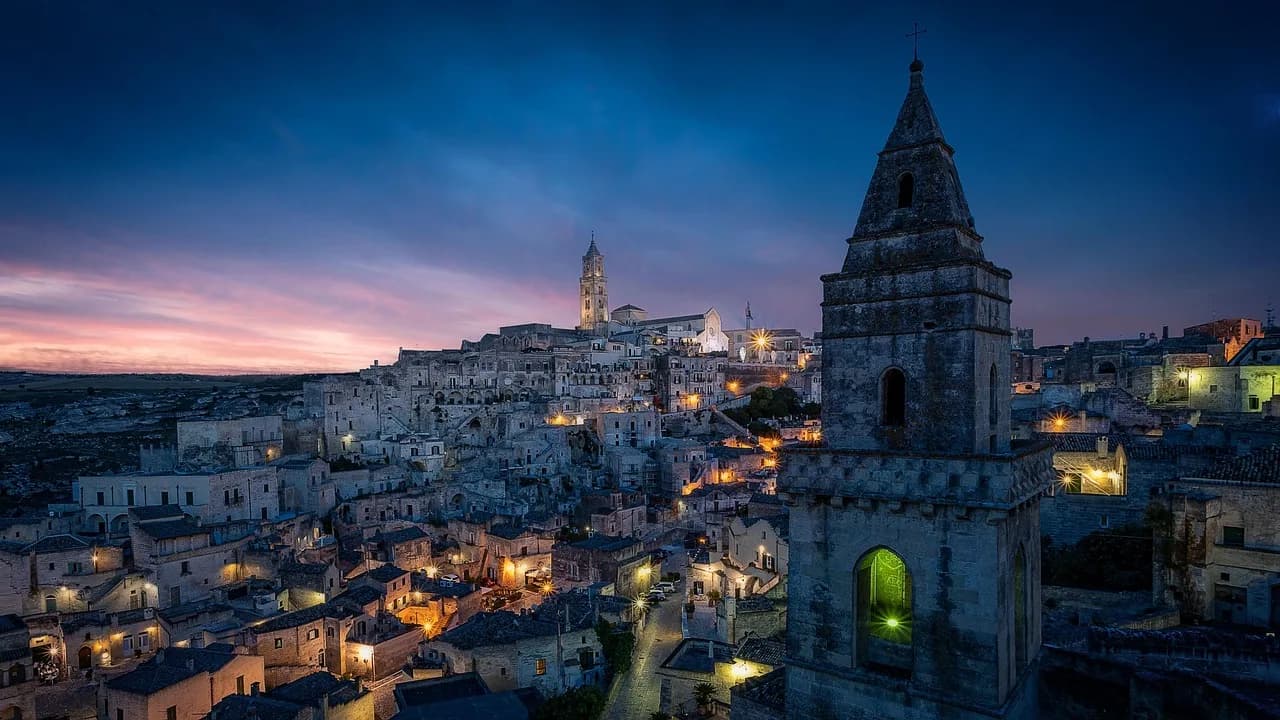
Evening: Watch golden hour melt into the blue hour from Piazzetta Pascoli (panorama to Santa Maria de Idris). Dine in a cave trattoria on crapiata and peperoni cruschi; finish with an amaro or a cocktail in a cave bar such as Zipa or Area 8 and a slow night stroll through lantern-lit steps.
Day 2: Sacred spaces and the ravine
Experience Matera’s spiritual heart in its rupestrian churches and the dramatic geography of the Gravina. You’ll balance big panoramas with intimate frescoed chapels.
Morning: Sunrise at Belvedere Murgia Timone across the ravine (shuttle or a 1.5–2 hr hike; carry water, hat, and wear sturdy shoes). Explore caves along the rim; in peak summer, avoid hiking after 10:00 due to heat.
By Air
Bari Karol Wojtyła (BRI) – nearest major airport, ~65 km. Driving/shuttle: 60–80 min.
Direct BRI–Matera coach: Pugliairbus (year‑round, 6–10+ services/day in season; ~1 hr 15 min).
Train into Bari Centrale from the airport (FR/Metro, ~17–20 min), then onward by FAL train to Matera.
Brindisi (BDS) – ~150 km; ~2 hrs by car. Public transport via Brindisi/Brindisi Airport → Bari Centrale → FAL to Matera.
Naples (NAP) – ~250 km; 3–3.5 hrs by car; direct intercity buses to Matera (4–5.5 hrs).
Rome (FCO/CIA) – 430–500 km; 5–6 hrs by car; multiple direct buses to Matera (5.5–7 hrs), or train to Bari then FAL.
By Train
Matera is not on the national (Trenitalia) rail network. It’s served by Ferrovie Appulo Lucane (FAL) narrow‑gauge trains from Bari.
Route: Bari Centrale FAL → Matera (Matera Centrale/Matera Sud/Villa Longo).
Journey time: ~1 hr 35 min–2 hrs; 1–2 trains/hour on weekdays; reduced service on Sundays/holidays (replacement buses at times).
Bari Centrale FAL is in a separate area from Trenitalia/Italo platforms—buy tickets from FAL.
National rail connections:
From major cities (Rome, Naples, Milan, Florence): high‑speed/InterCity to Bari Centrale, then FAL to Matera.
Matera delivers the wow-factor of Italy’s icons without the crush: a cave city where you can still find quiet lanes, big views and great value.
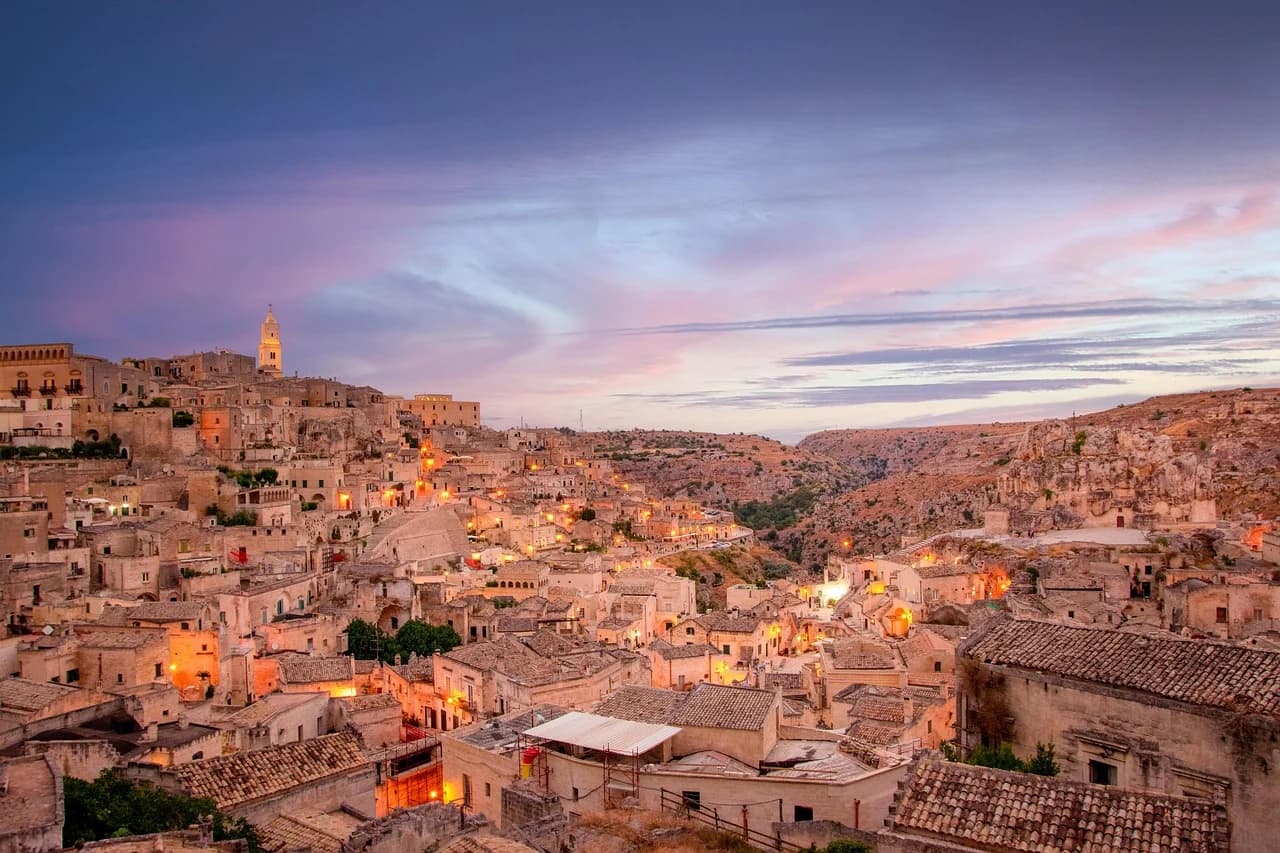
Atmosphere: Surreal, stone‑carved calm; wander the labyrinth of Sasso Caveoso and Sasso Barisano at your pace, watch the “presepe” glow at dusk, and enjoy unhurried evenings instead of elbow‑to‑elbow viewpoints.
Architecture & views: 9,000 years of “negative” architecture—from rupestrian churches to the Cathedral on the Civita—plus panoramas from Belvedere Murgia Timone and the underground drama of Palombaro Lungo; most sights are low‑cost or free to roam.
Food & craft: Honest Lucanian flavours with wallet‑friendly menus—pane di Matera, crapiata, cavatelli, peperoni cruschi—paired with cave‑bar aperitivi along Via Fiorentini; meet artisans keeping stone, ceramic and papier‑mâché traditions alive.
Traditions & rhythm: Authenticity runs deep: July’s Festa della Bruna and winter’s living nativity animate the city, while the nightly passeggiata on the Piano keeps things local; stay in a restored casa grotta for an immersive, good‑value base.
Craving a city where ancient stone and modern creativity coexist? Matera is a dramatic cave city whose Sassi form a UNESCO World Heritage landscape reborn with galleries, cave hotels and contemporary culture. From ravine‑top panoramas to intimate rock‑hewn churches, it suits travellers who like beauty with deep history attached.
History lovers: Trace a 9,000‑year story in the Sassi, from rupestrian churches and the Apulian‑Romanesque cathedral to the Casa Grotta and the vast Palombaro Lungo cistern.
Architecture & design fans: Discover “negative architecture” carved from tufo and superb adaptive‑reuse—minimalist suites, galleries and cave hotels that leave the original stone centre‑stage.
Scenery seekers/photographers: Capture sunrise and blue hour from Belvedere Murgia Timone, when the city glows like a living nativity and the Gravina ravine frames epic skyline shots.
Active travellers: Hike the Parco della Murgia Materana trails, cross the canyon via the Tibetan bridge (when open), and roam stair‑linked lanes that turn rooftops into streets.
Food lovers: Tear into Matera IGP bread, rustic crapiata and peperoni cruschi, then dine in atmospheric cave restaurants with views across the stone city.
Culture & festival fans: Time your trip for the explosive Festa della Bruna (2 July) or the winter Living Nativity, and enjoy venues born of European Capital of Culture 2019 like Cava del Sole and Casa Cava.
These are the unmissable highlights of Matera, distilling its ancient soul and cinematic scenery into a quick hit‑list. Use them to plan a first visit that balances icons with authentic corners.
Walk the labyrinthine stairs and rooftop lanes of the Sassi (Barisano and Caveoso) from the Duomo down to Vicinato di Malve.
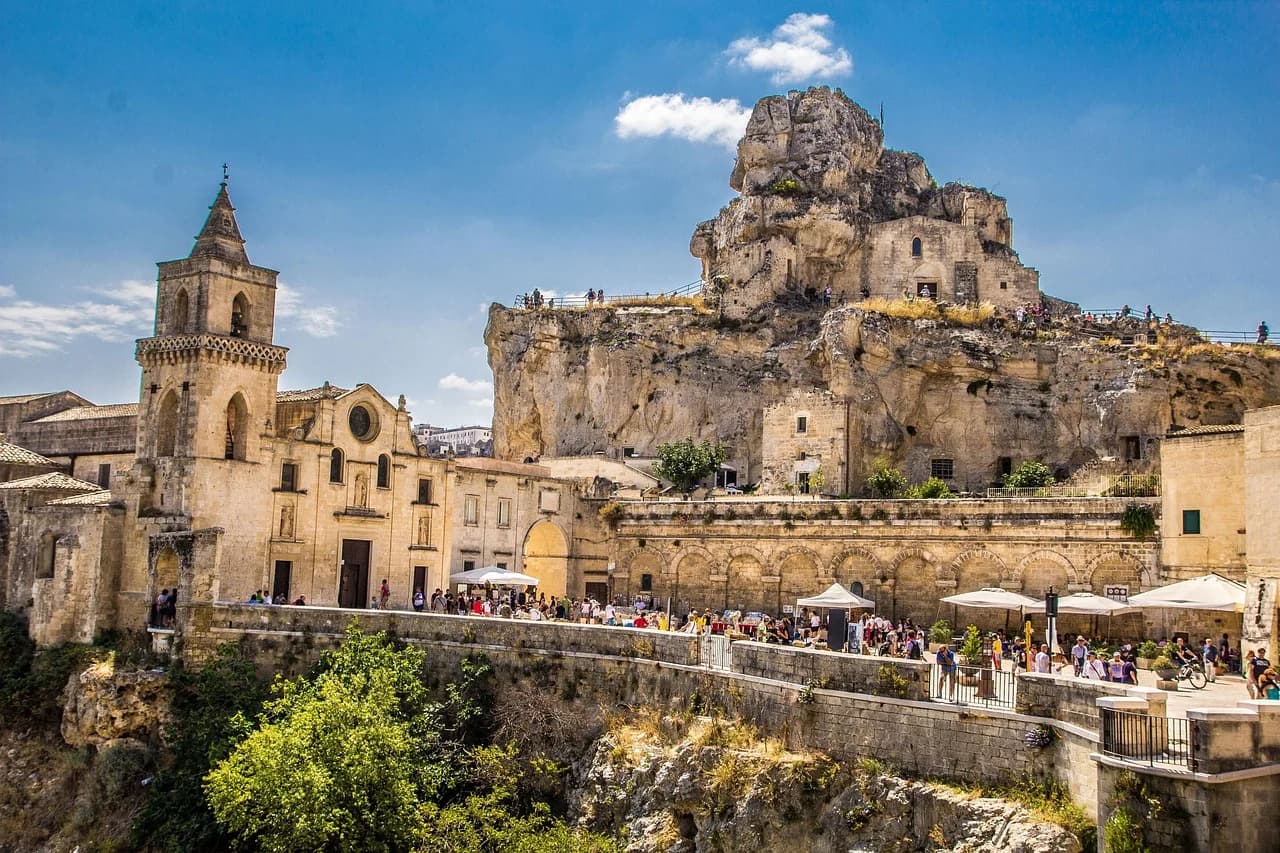
Explore the rock‑hewn churches—Santa Maria de Idris, Santa Lucia alle Malve, and the Convicinio di Sant’Antonio—to see Byzantine frescoes in the living rock.
Visit the Palombaro Lungo beneath Piazza Vittorio Veneto and a furnished Casa Grotta to grasp the city’s ingenious water system and cave life.
Take in golden‑hour and blue‑hour views from Piazza Pascoli or the Belvedere di Murgia Timone for the full presepe effect.
Hike the Murgia Materana Park across the Gravina (via trails or the Tibetan bridge) to panoramic cliffs and remote rupestrian chapels.
These are the unmissable highlights of Matera, distilling its ancient soul and cinematic scenery into a quick hit‑list. Use them to plan a first visit that balances icons with authentic corners.
Walk the labyrinthine stairs and rooftop lanes of the Sassi (Barisano and Caveoso) from the Duomo down to Vicinato di Malve.
Explore the rock‑hewn churches—Santa Maria de Idris, Santa Lucia alle Malve, and the Convicinio di Sant’Antonio—to see Byzantine frescoes in the living rock.
Visit the Palombaro Lungo beneath Piazza Vittorio Veneto and a furnished Casa Grotta to grasp the city’s ingenious water system and cave life.
Take in golden‑hour and blue‑hour views from Piazza Pascoli or the Belvedere di Murgia Timone for the full presepe effect.
Hike the Murgia Materana Park across the Gravina (via trails or the Tibetan bridge) to panoramic cliffs and remote rupestrian chapels.
Matera’s food culture is rooted in peasant ingenuity: bread, pulses, sun‑dried peppers, sheep’s cheeses and robust wines shaped by the Murgia. Expect simple, flavour‑packed dishes in cosy cave trattorie, bustling bakeries and cafés, lively markets, and intimate wine bars tucked into the Sassi.
Pane di Matera IGP – Signature thick‑crusted semolina sourdough; best torn warm and dipped in local olive oil. Pick it up at early‑morning bakeries or market stalls.
Crapiata – Hearty bean‑and‑grain stew born from communal harvests; earthy, comforting and slow‑simmered. Seek it in home‑style cave trattorie.
Peperoni cruschi – Sun‑dried red peppers flash‑fried until glassy‑crisp; snackable or crumbled over pasta and baccalà. Find them in bars with aperitivi or at produce counters.
Aglianico del Vulture – Volcanic, tannic red that pairs beautifully with lamb and aged cheeses. Sip by the glass in enoteche or candlelit cave restaurants.
Matera’s food culture is rooted in peasant ingenuity: bread, pulses, sun‑dried peppers, sheep’s cheeses and robust wines shaped by the Murgia. Expect simple, flavour‑packed dishes in cosy cave trattorie, bustling bakeries and cafés, lively markets, and intimate wine bars tucked into the Sassi.
Pane di Matera IGP – Signature thick‑crusted semolina sourdough; best torn warm and dipped in local olive oil. Pick it up at early‑morning bakeries or market stalls.
Crapiata – Hearty bean‑and‑grain stew born from communal harvests; earthy, comforting and slow‑simmered. Seek it in home‑style cave trattorie.
Peperoni cruschi – Sun‑dried red peppers flash‑fried until glassy‑crisp; snackable or crumbled over pasta and baccalà. Find them in bars with aperitivi or at produce counters.
Aglianico del Vulture – Volcanic, tannic red that pairs beautifully with lamb and aged cheeses. Sip by the glass in enoteche or candlelit cave restaurants.
Choosing where to stay in Matera is about picking the right area for your pace and mobility, not just a pretty room. Each neighbourhood has its own vibe, access and trade‑offs—especially stairs and ZTL rules. Here’s how to match the area to your style.
Sasso Barisano — Most restored Sassi side with easier access, many restaurants and boutique cave hotels; ideal for first‑timers wanting charm plus comforts and fewer stairs.
Sasso Caveoso — Rawer, more cave‑forward with dramatic ravine views and hush at night; best for romantics and photographers who don’t mind steep, uneven steps.
Civita (Duomo hill) — Exclusive ridge between the Sassi with sweeping terraces and historic palazzi; perfect for special occasions and tranquillity, but expect many steps and limited services.
Il Piano (upper town/centre) — Flat streets, parking and buses, lively passeggiata and better value; suits families, drivers and anyone with mobility concerns, a short walk to the Sassi.
Choosing where to stay in Matera is about picking the right area for your pace and mobility, not just a pretty room. Each neighbourhood has its own vibe, access and trade‑offs—especially stairs and ZTL rules. Here’s how to match the area to your style.
Sasso Barisano — Most restored Sassi side with easier access, many restaurants and boutique cave hotels; ideal for first‑timers wanting charm plus comforts and fewer stairs.
Sasso Caveoso — Rawer, more cave‑forward with dramatic ravine views and hush at night; best for romantics and photographers who don’t mind steep, uneven steps.
Civita (Duomo hill) — Exclusive ridge between the Sassi with sweeping terraces and historic palazzi; perfect for special occasions and tranquillity, but expect many steps and limited services.
Il Piano (upper town/centre) — Flat streets, parking and buses, lively passeggiata and better value; suits families, drivers and anyone with mobility concerns, a short walk to the Sassi.
Travel to this ancient cave city is straightforward, but a few local quirks (ZTL zones, lots of steps, festival dates) make planning smoother. It’s compact and magical to explore on foot; just bring good shoes and book ahead in peak periods.
Affordability: Expect coffees €1.20–€1.80, casual lunches €12–€20, mid-range dinners €25–€40 per person (more with wine), B&Bs €70–120, boutique cave hotels €180–400+, with prices spiking in summer and around 2 July (Festa della Bruna).
Transport: The historic core is walkable but steep and stepped, driving is restricted (ZTL), parking is on the edge, Bari airport is about 1–1.5 hours away with direct buses and local FAL trains to Matera, and day trips to Alberobello, Altamura, Gravina or the Murgia park are easiest by car (buses exist but are infrequent).
Language: Italian is the main language, English is generally understood in hotels, restaurants and tours but less so in small shops—basic Italian greetings go a long way.
Safety & comfort: It’s a very safe, family- and solo-friendly destination; wear grippy footwear for polished stone steps (slippery when wet), carry water in summer heat, and watch for petty theft only in festival or sunset crowds.
Crowds: Busiest from late spring to early autumn (plus weekends and the 2 July festival), quieter and great for reflection November–February; for the best experience, book ahead in high season and aim for early mornings or late evenings to dodge tour groups.
Travel to this ancient cave city is straightforward, but a few local quirks (ZTL zones, lots of steps, festival dates) make planning smoother. It’s compact and magical to explore on foot; just bring good shoes and book ahead in peak periods.
Affordability: Expect coffees €1.20–€1.80, casual lunches €12–€20, mid-range dinners €25–€40 per person (more with wine), B&Bs €70–120, boutique cave hotels €180–400+, with prices spiking in summer and around 2 July (Festa della Bruna).
Transport: The historic core is walkable but steep and stepped, driving is restricted (ZTL), parking is on the edge, Bari airport is about 1–1.5 hours away with direct buses and local FAL trains to Matera, and day trips to Alberobello, Altamura, Gravina or the Murgia park are easiest by car (buses exist but are infrequent).
Language: Italian is the main language, English is generally understood in hotels, restaurants and tours but less so in small shops—basic Italian greetings go a long way.
Safety & comfort: It’s a very safe, family- and solo-friendly destination; wear grippy footwear for polished stone steps (slippery when wet), carry water in summer heat, and watch for petty theft only in festival or sunset crowds.
Crowds: Busiest from late spring to early autumn (plus weekends and the 2 July festival), quieter and great for reflection November–February; for the best experience, book ahead in high season and aim for early mornings or late evenings to dodge tour groups.
Seasonality in Matera is driven by light and heat: spring and autumn offer the best balance of weather and crowds, while summer is intense but festive; winter is quiet, moody and great for atmosphere. Expect big day–night temperature swings and slippery stones in wet months.
Spring (Mar–May): Mild, bright and floral; manageable crowds; lively with Holy Week events and perfect for long walks and panoramic views.
High Summer (Jun–Aug): Very hot (often 30°C+), harsh midday sun; peak crowds and prices; vibrant evenings and major festivals (Festa della Bruna, 2 July)—explore at dawn/dusk.
Autumn (Sep–Nov): Warm days, crisp nights, clear post-rain air; fewer crowds; contemplative vibe, strong cultural calendar, superb photography light.
Seasonality in Matera is driven by light and heat: spring and autumn offer the best balance of weather and crowds, while summer is intense but festive; winter is quiet, moody and great for atmosphere. Expect big day–night temperature swings and slippery stones in wet months.
Spring (Mar–May): Mild, bright and floral; manageable crowds; lively with Holy Week events and perfect for long walks and panoramic views.
High Summer (Jun–Aug): Very hot (often 30°C+), harsh midday sun; peak crowds and prices; vibrant evenings and major festivals (Festa della Bruna, 2 July)—explore at dawn/dusk.
Autumn (Sep–Nov): Warm days, crisp nights, clear post-rain air; fewer crowds; contemplative vibe, strong cultural calendar, superb photography light.
Midday: Return to the Civita for the cathedral and views over both Sassi; grab a bakery lunch (pane di Matera with cured meats). If you prefer to stay in town, follow Via Madonna delle Virtù along the cliff-edge for constantly shifting perspectives.
Afternoon: Visit the Santa Lucia alle Malve and Santa Maria de Idris rock-churches or the Madonna delle Virtù & San Nicola dei Greci complex (combined tickets available). Be mindful of frescoes (no flash); book timed entries in high season.
Evening: Aperitivo on a terrace near Piazzetta Pascoli, then check if Casa Cava has a concert—its acoustics are extraordinary. For night photography, set up near Piazza Duomo or along the rooftop lanes for the full presepe effect.
Day 3: Ancient art and everyday life
Round out your visit with a masterpiece outside town and time with Matera’s living culture. Keep today flexible so you can linger where it feels best.
Morning: Head to the Cripta del Peccato Originale (9th‑century frescoes; pre-booking mandatory; reach by car/taxi, visit ~60–90 mins). Alternative if you’d rather stay local: the Domenico Ridola Archaeological Museum for Matera’s deep prehistory.
Midday: Return for a relaxed lunch in Sasso Caveoso; try orecchiette with cruschi or lamb with wild herbs. In winter, embrace the mist over the ravine—cafés on the piano are cosy refuges.
Afternoon: Meet artisans in cave workshops (ceramics, stone, papier‑mâché) and wander quieter vicinati around Malve. If legs are tired, an Ape Calessino or e‑buggy tour gives a breezy, low‑effort overview; note that many alleys are stair-only.
Evening: Climb to Piazza Duomo for sunset, then follow rooftop lanes down into Sasso Barisano for a final dinner. If your dates coincide with 2 July, the Festa della Bruna reshapes the whole evening—arrive early, expect crowds, and watch fireworks over the Sassi from a restaurant on the edge rather than the packed main square.
Alternative: Trenitalia to Ferrandina‑Pomarico‑Miglionico (on the Taranto–Potenza line) + regional bus to Matera (~50–60 min; limited schedules).
By Bus
Direct intercity coaches connect Matera with:
Bari (city/airport): Pugliairbus (airport), FlixBus, Miccolis (60–90 min).
Main stops in Matera: Piazza Matteotti/Via Don Luigi Sturzo area and Matera “Villa Longo” (check ticket for exact stop).
By Car
From Bari: SS96 → SS99 to Matera (~65 km; 1–1.25 hrs).
From Naples: A3/E45 → SS407 “Basentana” → SS7 (~3–3.5 hrs).
From Rome: A1 → A30/A2 → SS407/SS7 (~5–6 hrs).
ZTL: The Sassi are a limited‑traffic zone; do not drive into the historic core. Use edge‑of‑centre car parks (e.g., Via Saragat, Piazza Matteotti/Via Aldo Moro, Villa Longo) and walk or use local shuttles.
Affiliate links help keep Savler free, at no extra cost to you.
Craving a city where ancient stone and modern creativity coexist? Matera is a dramatic cave city whose Sassi form a UNESCO World Heritage landscape reborn with galleries, cave hotels and contemporary culture. From ravine‑top panoramas to intimate rock‑hewn churches, it suits travellers who like beauty with deep history attached.
History lovers: Trace a 9,000‑year story in the Sassi, from rupestrian churches and the Apulian‑Romanesque cathedral to the Casa Grotta and the vast Palombaro Lungo cistern.
Architecture & design fans: Discover “negative architecture” carved from tufo and superb adaptive‑reuse—minimalist suites, galleries and cave hotels that leave the original stone centre‑stage.
Scenery seekers/photographers: Capture sunrise and blue hour from Belvedere Murgia Timone, when the city glows like a living nativity and the Gravina ravine frames epic skyline shots.
Active travellers: Hike the Parco della Murgia Materana trails, cross the canyon via the Tibetan bridge (when open), and roam stair‑linked lanes that turn rooftops into streets.
Food lovers: Tear into Matera IGP bread, rustic crapiata and peperoni cruschi, then dine in atmospheric cave restaurants with views across the stone city.
Culture & festival fans: Time your trip for the explosive Festa della Bruna (2 July) or the winter Living Nativity, and enjoy venues born of European Capital of Culture 2019 like Cava del Sole and Casa Cava.