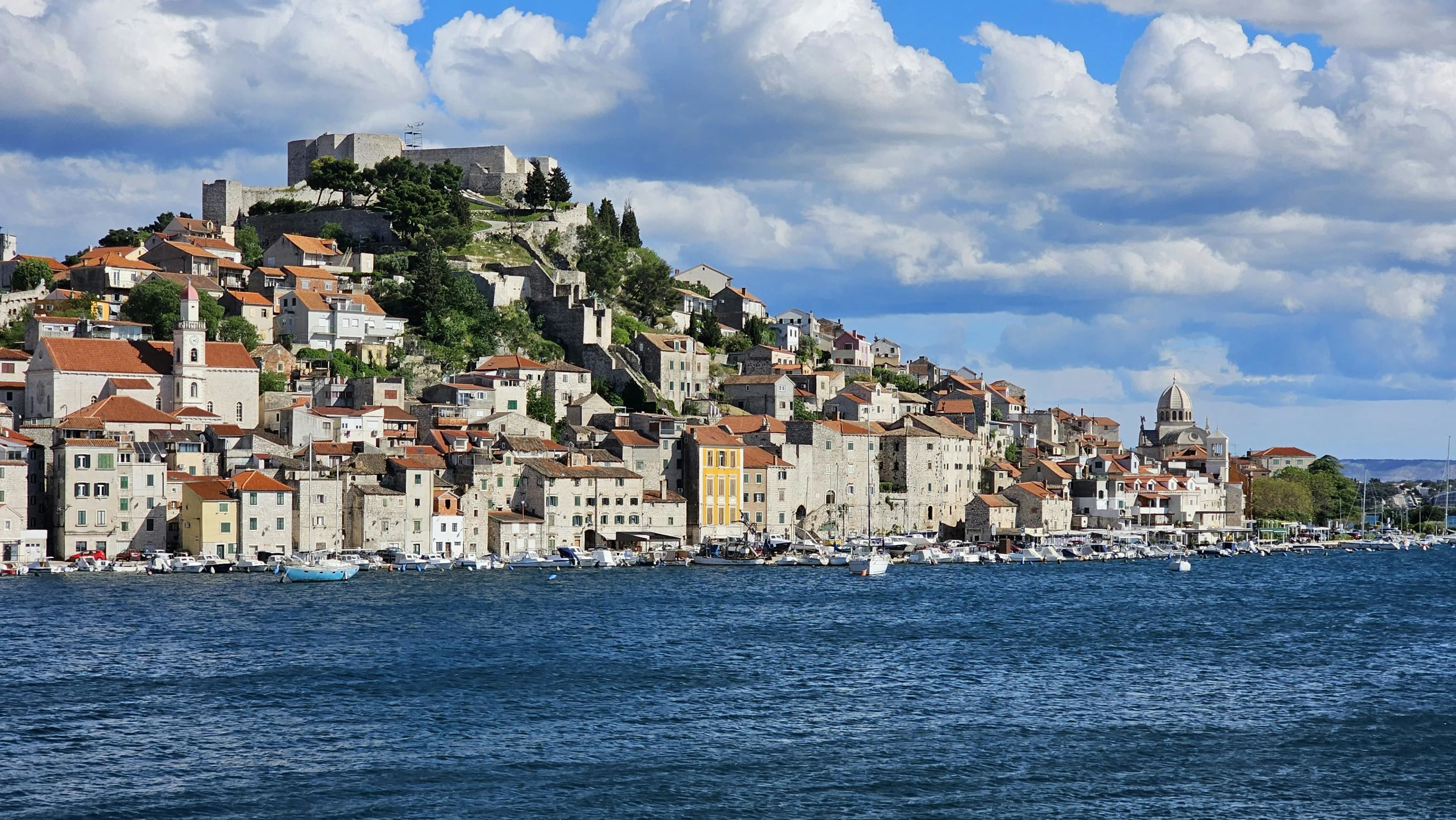
Share Šibenik with friends and start planning your trip together.
How to get to Šibenik
Have a great tip for Šibenik or another alternative to popular destinations?
Share your thoughts on Šibenik or suggest another authentic alternative to popular destinations. Your tips help others rediscover their love of travelling - while giving popular destinations a little room to breathe.
Please help us keep all core features free to use by using these affiliate links!
Day 1: Stone labyrinths, living heritage, and sunset over the rooftops
Šibenik’s medieval core rewards slow wandering: polished limestone lanes, tiny squares, and everyday life unfolding between centuries of stone. Today eases you in with market smells, cathedral light, and a fortress sunset that frames the archipelago in gold.
Morning: Park at the Poljana underground garage and enter the old town on foot (wear grippy shoes – stones can be slippery, especially after rain). Visit the market and fish hall just outside the centre for a local breakfast of burek or a quick marenda-style sandwich, then continue to the Cathedral of St. James; cover shoulders/knees to enter and don’t miss the baptistery and the 71 carved heads around the exterior.
Midday: Explore the lanes between the cathedral, City Hall, and the Church of St. Barbara; step into cool courtyards and peek at noble doorframes on Ulica Jurja Dalmatinca. For lunch, try a traditional konoba in the side streets (ask what’s fresh today – crni rižot or dagnje na buzaru if mussels are in season).
Afternoon: Walk up through the Gorica neighbourhood (quiet, residential, postcard views) to St. Michael’s Fortress for city-and-sea panoramas. If the bura wind is blowing, visibility is superb; bring a light layer as it can feel sharper on the ramparts.
Evening: Time dinner to sunset. Book ahead if you want a tasting menu opposite the cathedral; otherwise opt for a modern konoba in the old town or seafood in Dolac by the water. On concert nights (summer), return to St. Michael’s – the stage, stars, and silhouette of the archipelago are unforgettable.
Day 2: Sea, channel, and fortresses above the city
Today you circle Šibenik from the water’s edge to its highest vantage points. The channel walkway gives you the reverse angle on the skyline, while the 17th‑century forts explain why the city survived – and make perfect sunset perches.
By Air
Split (SPU) – approx. 60 km SE; 50–60 min by car/taxi. From the terminal take bus 37 to Trogir, then frequent intercity buses to Šibenik (about 1–1.5 h from Trogir). Seasonal direct coaches may operate. Car hire available.
Zadar (ZAD) – approx. 75 km NW; 50–60 min by car/taxi. Shuttle to Zadar main bus station, then frequent buses to Šibenik (about 1–1.5 h). Car hire available.
Zagreb (ZAG) – national hub; around 3.5–4.5 h to Šibenik by motorway coach or 3–3.5 h by car.
Dubrovnik (DBV) – approx. 3.5–4.5 h by car; long‑distance coaches also run (often with a change).
By Train
Limited rail service. Šibenik is a branch terminus with regional trains to Perković for connections to Split and Zagreb.
Typical times (with changes): Šibenik–Split 2.5–3.5 h; Šibenik–Zagreb 6–7.5 h. Buses are usually faster.
Šibenik railway station (Željeznički kolodvor) sits next to the bus station and marina, a 5–10 minute flat walk to the old town.
By Bus
Main hub: Autobusni kolodvor Šibenik (on the waterfront, near the centre). High frequencies year‑round, increased in summer.
Key routes (typical times):
Split: 1.5–2 h, very frequent.
Šibenik is a quieter Adriatic base that swaps shoulder-to-shoulder crowds for world‑class heritage, sea views and seriously good food.
Character & pace: A lived‑in, Croatian‑founded stone labyrinth where evening đir strolls, church bells and laundry‑lined alleys set an easy rhythm—more elbow room than the headline coastal names.
Heritage highlights: UNESCO‑listed Cathedral of St. James, Venetian‑era lanes, and three hilltop fortresses (St Michael, Barone, St John) for 360° sunsets and concerts; stroll the St Anthony’s Channel walkway or boat past the sea‑guarding St Nicholas Fortress.
Food & value: From market‑morning marenda and Krka‑estuary mussels to refined plates at Michelin‑starred Pelegrini—more local konobe, fewer tourist menus, and strong value for the Dalmatian coast.
Culture & community: International Children’s Festival turns streets into stages; klapa singing drifts across squares; authentic neighbourhoods like Gorica and Dolac keep everyday life front and centre—warm etiquette and modest church dress appreciated.
Šibenik is a gem for travellers who want a lived‑in medieval city without the crush of crowds. Expect UNESCO‑listed architecture, fortress‑top sunsets, superb Dalmatian cooking and easy access to islands and Krka National Park. If you’ve outgrown the gloss of Dubrovnik or the bustle of Split, this quieter, culture‑rich base is your sweet spot.
History lovers: Explore Croatia’s only native‑founded Adriatic city, from the UNESCO‑listed Cathedral of St James to Venetian palaces and four hilltop fortresses.
Scenery seekers: Drink in panoramic views over terracotta roofs and the archipelago from St Michael’s, Barone and St John’s, or walk the St Anthony Channel for postcard cityscapes.
Foodies: Feast on shellfish from the Krka estuary, Babić wines and a Michelin‑starred tasting at Pelegrini—at prices friendlier than Dubrovnik’s.
Active travellers: Climb atmospheric stone steps, cycle the seafront walkway, boat to St Nicholas’ sea‑fortress, or day‑trip to waterfalls in Krka National Park.
Culture & festival fans: Time your visit for fortress concerts, the International Children’s Festival, or the Evenings of Dalmatian Chanson on the cathedral square.
Game of Thrones fans: Wander Braavos filming spots in the old town, see the “Iron Bank” facade (the cathedral exterior) and head up to St John’s Fortress for Meereen‑style vistas.
Šibenik packs centuries of stone craftsmanship, sea views and living culture into a compact, walkable city. Here are the unmissable highlights to make the most of your visit.
Walk the maze-like stone lanes from the Riva to UNESCO-listed St James’s Cathedral, pausing at the 71 carved heads and the elegant City Hall.
Explore St Michael’s, Barone and St John’s fortresses for sweeping Adriatic panoramas, augmented‑reality history and unforgettable sunset concerts.
Visit the morning market and the Dolac quarter’s family konobe to savour Šibenik mussels, black risotto and local Babić and Debit wines.
Take a boat through the St Anthony Channel to the UNESCO sea‑fortress of St Nicholas and admire the skyline from the water.
Hike the St Anthony’s Channel promenade for pine‑framed vistas and the perfect reverse‑angle shot of the old town and archipelago.
Šibenik packs centuries of stone craftsmanship, sea views and living culture into a compact, walkable city. Here are the unmissable highlights to make the most of your visit.
Walk the maze-like stone lanes from the Riva to UNESCO-listed St James’s Cathedral, pausing at the 71 carved heads and the elegant City Hall.
Explore St Michael’s, Barone and St John’s fortresses for sweeping Adriatic panoramas, augmented‑reality history and unforgettable sunset concerts.
Visit the morning market and the Dolac quarter’s family konobe to savour Šibenik mussels, black risotto and local Babić and Debit wines.
Take a boat through the St Anthony Channel to the UNESCO sea‑fortress of St Nicholas and admire the skyline from the water.
Hike the St Anthony’s Channel promenade for pine‑framed vistas and the perfect reverse‑angle shot of the old town and archipelago.
Šibenik’s food culture is proudly local: sea‑to‑table seafood, herb‑fed lamb, and olive oil from nearby groves. Expect simple, flavour‑first dishes served in stone‑walled konobe, a lively market‑and‑marenda rhythm, and a slow coffee culture.
Dagnje na buzaru – Krka estuary mussels steamed with white wine, garlic and parsley, sweet and saline. Best savoured in a harbour‑side konoba or on the Riva as boats bob past.
Crni rižot – Black risotto with cuttlefish ink, rich, briny and deeply savoury. Order in a tucked‑away old‑town courtyard; it’s as much about the mood as the flavour.
Peka (octopus or lamb) – Slow‑cooked under an iron bell with potatoes and herbs until meltingly tender. Pre‑order and enjoy at a rustic hinterland konoba or agrotourism terrace at sunset.
Babić & Debit – Local red (Babić) and crisp white (Debit) wines that pair with seafood and lamb. Sip flights in cosy wine bars or at cellar‑door tastings around the bay.
Šibenik’s food culture is proudly local: sea‑to‑table seafood, herb‑fed lamb, and olive oil from nearby groves. Expect simple, flavour‑first dishes served in stone‑walled konobe, a lively market‑and‑marenda rhythm, and a slow coffee culture.
Dagnje na buzaru – Krka estuary mussels steamed with white wine, garlic and parsley, sweet and saline. Best savoured in a harbour‑side konoba or on the Riva as boats bob past.
Crni rižot – Black risotto with cuttlefish ink, rich, briny and deeply savoury. Order in a tucked‑away old‑town courtyard; it’s as much about the mood as the flavour.
Peka (octopus or lamb) – Slow‑cooked under an iron bell with potatoes and herbs until meltingly tender. Pre‑order and enjoy at a rustic hinterland konoba or agrotourism terrace at sunset.
Babić & Debit – Local red (Babić) and crisp white (Debit) wines that pair with seafood and lamb. Sip flights in cosy wine bars or at cellar‑door tastings around the bay.
Choosing the right area in Šibenik matters more than the hotel—each neighbourhood offers a different pace, vibe and level of convenience. Think about trade‑offs between atmosphere, access and noise to match your trip style. Here are the best bases:
Old Town (Stari Grad) — Labyrinthine stone lanes by the UNESCO cathedral; magical and authentic for history lovers and couples, but many stairs and no car access.
Riva & Poljana (Waterfront/Centre) — Flat, central and practical with cafés, markets and the main garage/bus; ideal for first‑timers, short stays and prams.
Banj Beach & Dolac — Beach‑with‑a‑view and fishermen’s cove 10–15 minutes from the centre; great for swimmers and sunset lovers, with some slopes and steps.
Amadria Park (Solaris) Resort — Full‑service seaside complex 5 km south with kid‑friendly beaches, pools and a water park; best for families seeking an easy stay, taxi/boat to town.
Choosing the right area in Šibenik matters more than the hotel—each neighbourhood offers a different pace, vibe and level of convenience. Think about trade‑offs between atmosphere, access and noise to match your trip style. Here are the best bases:
Old Town (Stari Grad) — Labyrinthine stone lanes by the UNESCO cathedral; magical and authentic for history lovers and couples, but many stairs and no car access.
Riva & Poljana (Waterfront/Centre) — Flat, central and practical with cafés, markets and the main garage/bus; ideal for first‑timers, short stays and prams.
Banj Beach & Dolac — Beach‑with‑a‑view and fishermen’s cove 10–15 minutes from the centre; great for swimmers and sunset lovers, with some slopes and steps.
Amadria Park (Solaris) Resort — Full‑service seaside complex 5 km south with kid‑friendly beaches, pools and a water park; best for families seeking an easy stay, taxi/boat to town.
Šibenik is easy to navigate, with most highlights clustered in and around its compact medieval core; a few local quirks—steep stone lanes, polished paving and summer crowds—are worth knowing ahead of time. With sensible shoes and a loose schedule, you can see a lot on foot and still slip away to islands or Krka National Park for the day.
Affordability: Mid‑priced by Croatian standards—coffee €2–3, a simple marenda €10–15, dinner in a konoba €25–40 per person, and summer doubles roughly €80–150 mid‑range (budget €50–80; boutique €180+).
Transport: The old town is pedestrian and steep but walkable; park in the Poljana underground car park, use frequent buses for Split/Zadar, hire a car for Krka and the hinterland, and hop ferries/taxi‑boats to nearby islands (Zlarin, Prvić).
Language: Croatian is the official language, but English is widely spoken in tourism, with English menus/signage common—simple greetings like “Dobar dan” and “Hvala” are appreciated.
Safety & comfort: Very safe and friendly for families and solo travellers; take care on slippery polished stone (wear grippy shoes), stay hydrated in summer heat, and watch for petty theft in peak crowds.
Crowds: Peak season is late June–August (plus cruise‑ship mornings), so aim for early/late sightseeing or visit in May–June or September–October for fewer crowds; winters are quiet with shorter hours.
Šibenik is easy to navigate, with most highlights clustered in and around its compact medieval core; a few local quirks—steep stone lanes, polished paving and summer crowds—are worth knowing ahead of time. With sensible shoes and a loose schedule, you can see a lot on foot and still slip away to islands or Krka National Park for the day.
Affordability: Mid‑priced by Croatian standards—coffee €2–3, a simple marenda €10–15, dinner in a konoba €25–40 per person, and summer doubles roughly €80–150 mid‑range (budget €50–80; boutique €180+).
Transport: The old town is pedestrian and steep but walkable; park in the Poljana underground car park, use frequent buses for Split/Zadar, hire a car for Krka and the hinterland, and hop ferries/taxi‑boats to nearby islands (Zlarin, Prvić).
Language: Croatian is the official language, but English is widely spoken in tourism, with English menus/signage common—simple greetings like “Dobar dan” and “Hvala” are appreciated.
Safety & comfort: Very safe and friendly for families and solo travellers; take care on slippery polished stone (wear grippy shoes), stay hydrated in summer heat, and watch for petty theft in peak crowds.
Crowds: Peak season is late June–August (plus cruise‑ship mornings), so aim for early/late sightseeing or visit in May–June or September–October for fewer crowds; winters are quiet with shorter hours.
Šibenik follows a classic Mediterranean rhythm: scorching, busy summers; balmy, relaxed shoulder months; and a peaceful, locals-first winter. Festivals peak in summer, while spring and autumn are best for sightseeing and food.
Shoulder Season (Apr–May & Sep–Oct): Mild to warm, mostly sunny; manageable crowds; relaxed, authentic vibe ideal for wandering the old town and fortresses.
High Summer (Jun–Aug): Hot (often very), busiest period with festivals and nightlife; vibrant atmosphere but crowded streets and higher prices.
Winter (Nov–Mar): Cool and quiet with some rain; many tourist venues reduce hours; contemplative, local feel and great value.
Šibenik follows a classic Mediterranean rhythm: scorching, busy summers; balmy, relaxed shoulder months; and a peaceful, locals-first winter. Festivals peak in summer, while spring and autumn are best for sightseeing and food.
Shoulder Season (Apr–May & Sep–Oct): Mild to warm, mostly sunny; manageable crowds; relaxed, authentic vibe ideal for wandering the old town and fortresses.
High Summer (Jun–Aug): Hot (often very), busiest period with festivals and nightlife; vibrant atmosphere but crowded streets and higher prices.
Winter (Nov–Mar): Cool and quiet with some rain; many tourist venues reduce hours; contemplative, local feel and great value.
Morning: Head to the St. Anthony’s Channel walkway (šetnica) near the Šibenik Bridge; walk or cycle the 4.4 km path beneath pines with constant views back to town. Pause at the viewpoint platform for the classic skyline shot; in high summer go early for shade and cooler air.
Midday: If seas are calm, take the official boat tour to St. Nicholas’ Fortress (tickets/boat from the Riva; advance booking recommended). If boats aren’t running, admire it from the walkway and return to town for a simple marenda near the market (daily specials sell out by 13:00).
Afternoon: Climb to Barone Fortress for coffee and its augmented‑reality look at the 1647 siege, then continue to St. John’s Fortress (the highest) for a 360° panorama over the old town, Krka estuary, and islands; it’s a 15–20 minute steep walk – bring water and sun protection.
Evening: Do a leisurely Braavos walk for Game of Thrones fans: the mandrać below the cathedral, alleys by St. Barbara, and the cathedral square as the Iron Bank exterior. Dine back in the centre (seafood in Dolac for casual; a refined old‑town bistro if you prefer), then finish with a drink at Azimut by the arches on the seafront.
Day 3: Waterfalls or islands by day, klapa and candlelight by night
Choose between a river‑and‑falls escape or an island hop, then slide back into Šibenik’s evening ritual of song, squares, and slow dinners. If you’re here in festival season, the streets themselves become a stage.
Morning: Option A (nature): Bus or drive 20–25 minutes to Krka National Park (Skradinski Buk); arrive at opening for softer light and quieter boardwalks. Option B (islands): Catch the morning ferry to Zlarin or Prvić; as the boat pulls away, turn back for a superb city panorama.
Midday: Option A: Picnic by the river or lunch in Skradin (order skradinski rižot a day in advance if you can). Option B: Swim, stroll car‑free lanes, and lunch at a family konoba (ask for grilled fish na gradele; house Debit or Babić by the carafe pairs well).
Afternoon: Return to town for a beach hour at Banj (best wide‑angle view of the cathedral and fortress), or coffee in the shade on the Riva during the local đir. If heat is fierce (July–August), plan indoor breaks 13:00–16:00.
Evening: Book an early dinner on the cathedral square or at a favourite old‑town konoba; reserve well ahead for fine dining. Seasonal notes: late June–early July the International Children’s Festival fills streets with performances and workshops; late September the Medieval Fair brings artisans and knightly displays; in August, the Evenings of Dalmatian Chanson on the main square deliver pure klapa magic.
Zadar: 1–1.5 h, very frequent.
Trogir: 1–1.5 h, frequent.
Zagreb: 4–5.5 h, frequent.
Dubrovnik: 5–7 h, often 1 change.
Operators include Arriva, FlixBus and local carriers; buy online or at the station.
By Car
Fastest approach via A1 motorway (E65/E71). Use exit Šibenik (22) for the D33 into town. Alternatives: Pirovac or Vrpolje exits depending on origin.
Approximate driving times: Split 1–1.5 h (≈90 km), Zadar ~1 h (≈90 km), Zagreb 3–3.5 h (≈320 km). The coastal D8 is scenic but slower.
Tolls apply on the A1. Old town is pedestrianised; use Poljana underground garage or waterfront car parks and walk.
By Ferry/Boat
No international ferries to Šibenik. Nearest international links: Ancona–Zadar and Ancona–Split; continue by bus or car.
From Šibenik port, Jadrolinija/catamarans serve nearby islands (Zlarin, Prvić, Kaprije, Žirje); useful for local trips rather than mainland arrivals.
Affiliate links help keep Savler free, at no extra cost to you.
Šibenik is a gem for travellers who want a lived‑in medieval city without the crush of crowds. Expect UNESCO‑listed architecture, fortress‑top sunsets, superb Dalmatian cooking and easy access to islands and Krka National Park. If you’ve outgrown the gloss of Dubrovnik or the bustle of Split, this quieter, culture‑rich base is your sweet spot.
History lovers: Explore Croatia’s only native‑founded Adriatic city, from the UNESCO‑listed Cathedral of St James to Venetian palaces and four hilltop fortresses.
Scenery seekers: Drink in panoramic views over terracotta roofs and the archipelago from St Michael’s, Barone and St John’s, or walk the St Anthony Channel for postcard cityscapes.
Foodies: Feast on shellfish from the Krka estuary, Babić wines and a Michelin‑starred tasting at Pelegrini—at prices friendlier than Dubrovnik’s.
Active travellers: Climb atmospheric stone steps, cycle the seafront walkway, boat to St Nicholas’ sea‑fortress, or day‑trip to waterfalls in Krka National Park.
Culture & festival fans: Time your visit for fortress concerts, the International Children’s Festival, or the Evenings of Dalmatian Chanson on the cathedral square.
Game of Thrones fans: Wander Braavos filming spots in the old town, see the “Iron Bank” facade (the cathedral exterior) and head up to St John’s Fortress for Meereen‑style vistas.