Share Glasgow with friends and start planning your trip together.
How to get to Glasgow
Have a great tip for Glasgow or another alternative to popular destinations?
Share your thoughts on Glasgow or suggest another authentic alternative to popular destinations. Your tips help others rediscover their love of travelling - while giving popular destinations a little room to breathe.
Please help us keep all core features free to use by using these affiliate links!
Day 1: West End, riverside and world‑class galleries
Ease into Glasgow via its leafiest quarter. The West End blends Victorian grandeur with bohemian cafés, riverside walks and two of the city’s finest museums within a 15‑minute stroll of each other.
Morning: Start at the Riverside Museum and the Tall Ship for transport history with Clyde views, then follow the Kelvin Walkway upstream towards Kelvingrove (flat, scenic path; great in sunshine but pack a waterproof any time of year). Coffee stops en route abound; Inn Deep’s riverside terrace is a handy pause.
Midday: Explore Kelvingrove Art Gallery and Museum; if you’re here around 1 pm, the daily organ recital fills the hall (perfect on a drizzly day). Lunch nearby in Finnieston (Crabshakk for seafood; Ox and Finch for small plates) – book ahead Thu–Sat.
Afternoon: Wander the University of Glasgow cloisters and the Hunterian; design fans should add the Mackintosh House (last entries mid‑afternoon; timed tickets). Continue to Ashton Lane for a mid‑afternoon coffee or a quiet dram in the Wee Pub.
Evening: Dine in the West End (Ubiquitous Chip for modern Scottish; Paesano for superb, quick pizza if you’re short on time). For music, check Oran Mór’s programme or head into town for King Tut’s; buy tickets in advance and note the Subway stops running around 11.30 pm.
Day 2: Cathedral, murals, Clydeside and a whisky night
Today mixes medieval Glasgow with street art and a deep dive into whisky. Keep your camera handy – the mural trail threads colour through the city centre.
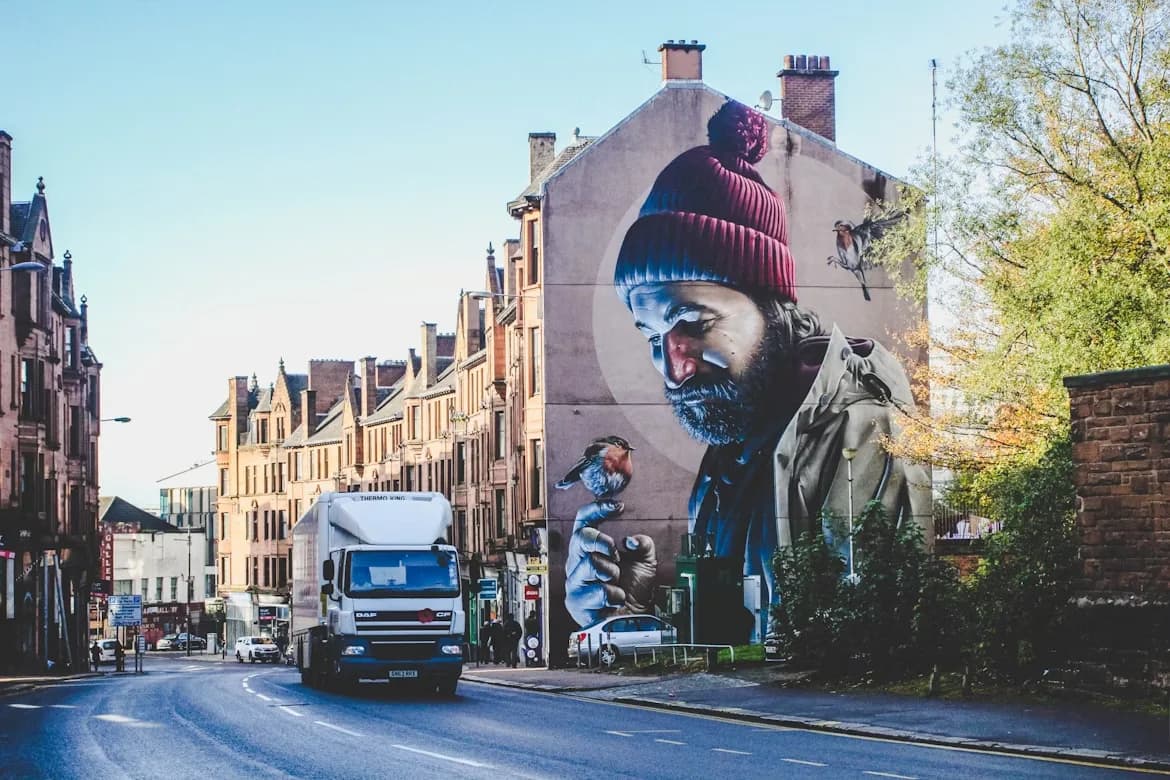
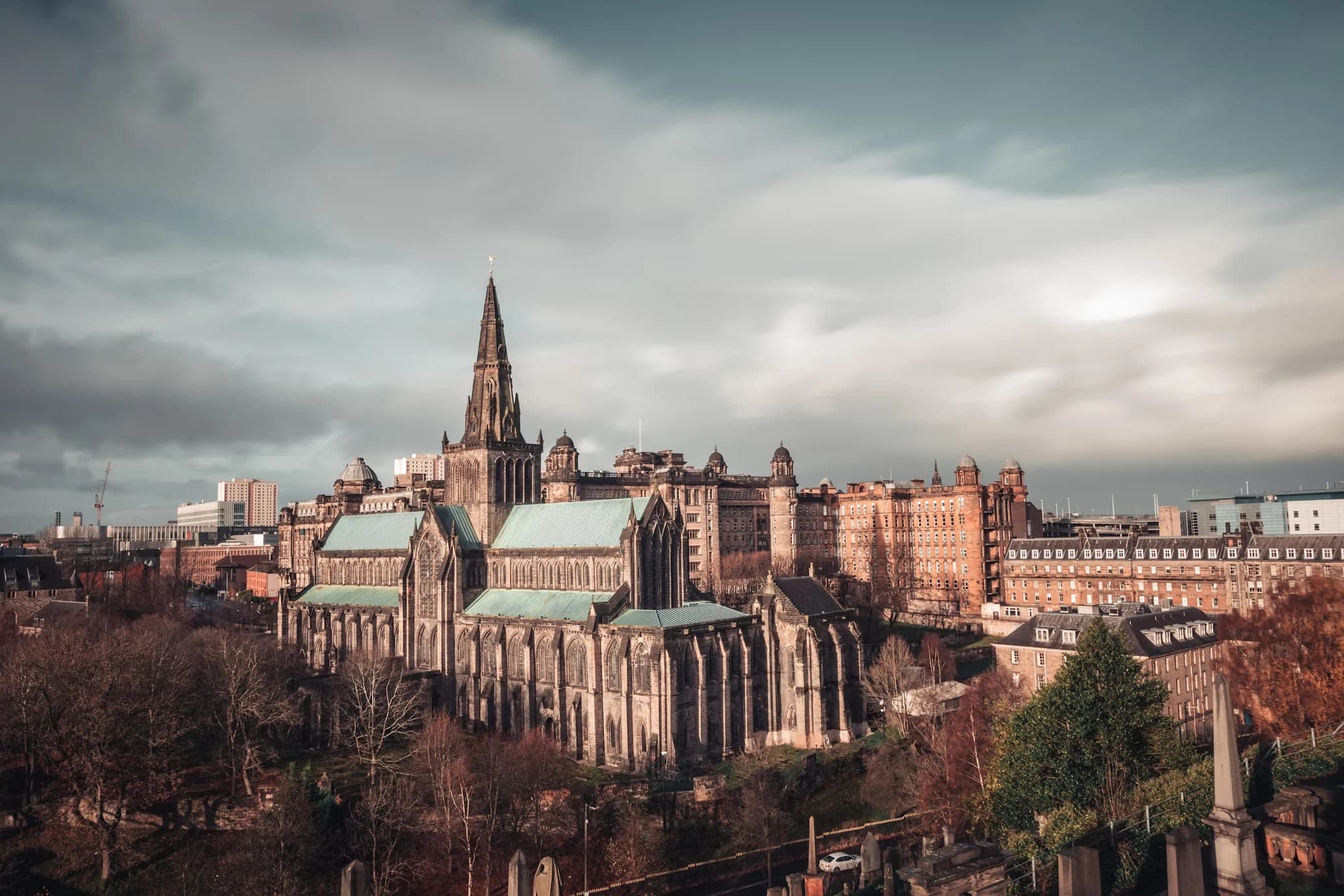
Morning: Visit Glasgow Cathedral then climb the Necropolis for skyline views (paths can be slippy in winter; wear decent shoes). Walk or bus to the Merchant City, picking up the City Centre Mural Trail as you go (Smug’s St Mungo on High Street is a highlight).
By Air
Glasgow Airport (GLA), ~14 km west of the centre (Paisley).
Glasgow Airport Express (First Bus 500) to Buchanan Bus Station: 15–25 minutes, every 10 mins daytime.
Taxi/ride-hail to city centre: typically 15–25 minutes (traffic dependent).
Direct flights from London and many European hubs; long‑haul via major hubs (e.g., Amsterdam, Heathrow, Dubai).
Glasgow Prestwick Airport (PIK), ~50 km southwest.
Train to Glasgow Central: ~45–55 minutes (walkway from terminal to station; discount with airline boarding pass).
Edinburgh Airport (EDI), ~65 km east.
Citylink AIR coach to Glasgow Buchanan: ~60–75 minutes.
Tram to Edinburgh Gateway + ScotRail to Glasgow Queen Street: ~70–90 minutes.
Driving via M8: ~50–70 minutes.
By Train
Main stations: Glasgow Central (services to/from England, Ayrshire & southwest Scotland) and Glasgow Queen Street (Edinburgh, Stirling, Highlands, Aberdeen, Inverness).
Key direct services:
London Euston – Glasgow Central (Avanti West Coast): fastest ~4h30–5h.
Glasgow delivers big‑city culture without big‑city crowds, pairing world‑class art, music and food with a friendly, down‑to‑earth feel.
Vibe: Warm, witty and unpretentious; “People Make Glasgow” rings true in lively pubs, late‑night gig rooms (Barrowland Ballroom, Sub Club) and street chatter that welcomes you in.
Authenticity: Less polished than postcard cities—and all the better for it—Glasgow swaps selfie lines for real neighbourhoods: Finnieston’s food strip, the West End’s Byres Road and Kelvingrove, and the Southside’s Shawlands/Govanhill. Hop the simple “Clockwork Orange” subway and follow the City Centre Mural Trail between stops.
Value: A culture‑rich city that’s kind to your wallet—think Paesano’s famed pies, Indian small‑plates at Mother India’s Café, market bites at The Big Feed/Dockyard Social, and a classic “hauf and a hauf” in a proper pub.
Culture: From Kelvingrove and the award‑winning Burrell Collection to Mackintosh highlights (The Mackintosh House, Mackintosh at the Willow), Glasgow layers heritage with live traditions—Burns Night suppers, Celtic Connections in winter, and summer pipe bands on Glasgow Green.
Glasgow suits travellers who want big‑city culture with warmth, character and value. It’s perfect for food lovers, live‑music fans and design buffs who prefer an edgier, more lived‑in feel than polished capitals. Friendly locals and a compact centre make it an easy, rewarding city break.
Foodies: Expect modern Scottish small plates, famed curries and standout vegan spots across Glasgow, with better value than London and often shorter queues than Edinburgh.
Music lovers & night owls: As a UNESCO City of Music, Glasgow delivers legendary gigs at the Barrowland and King Tut’s plus world‑class clubbing at Sub Club.
Culture vultures: Free museums (Kelvingrove, GoMA, the Burrell), Mackintosh architecture and a superb street‑art trail make Glasgow a cultural heavyweight.
History lovers: Explore Clydeside shipbuilding heritage, Victorian grandeur and the city’s whisky‑trade story on easy, walkable routes.
Whisky & beer fans: Tour urban distilleries (Clydeside, Glasgow 1770), Tennent’s Wellpark and craft taprooms, then toast a classic “hauf and a hauf” in a proper pub.
City‑breakers & value seekers: A compact core, simple subway and famously friendly locals make Glasgow an easier, better‑value alternative to Edinburgh for a weekend.
These are the unmissable highlights of Glasgow for first-time visitors. From art and music to green escapes, they capture the city’s spirit.
Walk the City Centre Mural Trail to see Smug’s St Mungo and other towering street art.
Explore Kelvingrove Art Gallery & Museum and the leafy West End lanes around Ashton Lane and the University.
Visit the Barrowland Ballroom or King Tut’s for a legendary Glasgow gig and that famous crowd roar.
Take the subway “Clockwork Orange” loop and hop off for whisky at The Pot Still or a tour at The Clydeside Distillery.
Hike Pollok Country Park’s woodland paths to spot Highland cows and see the award‑winning Burrell Collection.
These are the unmissable highlights of Glasgow for first-time visitors. From art and music to green escapes, they capture the city’s spirit.
Walk the City Centre Mural Trail to see Smug’s St Mungo and other towering street art.
Explore Kelvingrove Art Gallery & Museum and the leafy West End lanes around Ashton Lane and the University.
Visit the Barrowland Ballroom or King Tut’s for a legendary Glasgow gig and that famous crowd roar.
Take the subway “Clockwork Orange” loop and hop off for whisky at The Pot Still or a tour at The Clydeside Distillery.
Hike Pollok Country Park’s woodland paths to spot Highland cows and see the award‑winning Burrell Collection.
Glasgow’s food culture is big-hearted, unpretentious and proudly local, fuelled by world-class Scottish produce and a deep love of sharing a meal. Expect cosy pubs, buzzing curry houses, no‑frills cafés and late‑night chippies, all with trademark Glaswegian warmth.
Haggis, neeps & tatties – Peppery haggis with mashed swede and potatoes, often finished with a whisky cream sauce. Best in cosy pubs and brasseries with a lively, chatty atmosphere.
Chicken Tikka Masala – Glasgow‑claimed classic of tender tikka in a creamy tomato‑spice sauce. Join the crowds in buzzing curry houses across Finnieston, the West End and the Southside.
Roll and square (Lorne sausage) – A soft morning roll stuffed with square sausage (add egg or a tattie scone). Perfect from no‑frills cafés and busy bakeries at breakfast time.
Hauf an' a Hauf – The authentic pairing: a half‑pint of beer with a wee dram of whisky. Sip it in friendly, wood‑panelled bars where the patter flows.
Glasgow’s food culture is big-hearted, unpretentious and proudly local, fuelled by world-class Scottish produce and a deep love of sharing a meal. Expect cosy pubs, buzzing curry houses, no‑frills cafés and late‑night chippies, all with trademark Glaswegian warmth.
Haggis, neeps & tatties – Peppery haggis with mashed swede and potatoes, often finished with a whisky cream sauce. Best in cosy pubs and brasseries with a lively, chatty atmosphere.
Chicken Tikka Masala – Glasgow‑claimed classic of tender tikka in a creamy tomato‑spice sauce. Join the crowds in buzzing curry houses across Finnieston, the West End and the Southside.
Roll and square (Lorne sausage) – A soft morning roll stuffed with square sausage (add egg or a tattie scone). Perfect from no‑frills cafés and busy bakeries at breakfast time.
Hauf an' a Hauf – The authentic pairing: a half‑pint of beer with a wee dram of whisky. Sip it in friendly, wood‑panelled bars where the patter flows.
Choosing where to stay in Glasgow is about picking the right neighbourhood, not a specific hotel. Each area has its own vibe, conveniences, and night-time energy—choose what matches your plans. Here are the best bases for different types of trips.
City Centre & Merchant City — Most walkable for first‑timers; shopping, galleries and theatres on your doorstep, great transport links, lively nights.
West End (Byres Road/Ashton Lane) — Leafy, bohemian and studenty; museums, cafés and independent shops; ideal for culture lovers and families.
Finnieston (Argyle Street strip) — Trendy restaurant/bar hub near the Hydro/SEC; perfect for foodies and gig‑goers who want buzzy evenings.
Southside (Shawlands/Strathbungo) — Local vibe and better value; parks (Queen’s Park/Pollok), excellent global eats; good for longer, quieter stays.
Choosing where to stay in Glasgow is about picking the right neighbourhood, not a specific hotel. Each area has its own vibe, conveniences, and night-time energy—choose what matches your plans. Here are the best bases for different types of trips.
City Centre & Merchant City — Most walkable for first‑timers; shopping, galleries and theatres on your doorstep, great transport links, lively nights.
West End (Byres Road/Ashton Lane) — Leafy, bohemian and studenty; museums, cafés and independent shops; ideal for culture lovers and families.
Finnieston (Argyle Street strip) — Trendy restaurant/bar hub near the Hydro/SEC; perfect for foodies and gig‑goers who want buzzy evenings.
Southside (Shawlands/Strathbungo) — Local vibe and better value; parks (Queen’s Park/Pollok), excellent global eats; good for longer, quieter stays.
Getting to and around Glasgow is straightforward, and the city is easy to navigate once you know a few basics. Public transport is simple, walking is pleasant in core areas, and costs are generally kinder than in many UK cities.
Affordability: Expect mid‑range meals at £12–£20, a pint £5–£6.50, coffees £3–£4, decent hotels £90–£160 (boutique £160–£220), and hostels £20–£40, with prices typically lower than Edinburgh or London.
Transport: The City Centre and West End are walkable, the Subway (Clockwork Orange) and buses cover most areas (note the Subway stops around 23:30), ScotRail makes easy day trips (e.g., Loch Lomond via Balloch), and rail‑and‑sail links reach nearby isles, while taxis/Uber and the 24/7 airport bus keep travel simple.
Language: English is the main language and universally understood, though you’ll hear Glaswegian accents and the odd Scots phrase that locals are happy to explain.
Safety & comfort: It’s a generally safe, friendly city for families and solo travellers; use normal city sense (watch late‑night crowds and your valuables), pack layers and a waterproof, and expect a warm welcome for LGBTQ+ visitors.
Crowds: Peak season is June–August (plus December weekends), shoulder months April–May and September–October are calmer, January/February is quieter apart from Celtic Connections, and occasional cruise days funnel extra visitors into the centre.
Getting to and around Glasgow is straightforward, and the city is easy to navigate once you know a few basics. Public transport is simple, walking is pleasant in core areas, and costs are generally kinder than in many UK cities.
Affordability: Expect mid‑range meals at £12–£20, a pint £5–£6.50, coffees £3–£4, decent hotels £90–£160 (boutique £160–£220), and hostels £20–£40, with prices typically lower than Edinburgh or London.
Transport: The City Centre and West End are walkable, the Subway (Clockwork Orange) and buses cover most areas (note the Subway stops around 23:30), ScotRail makes easy day trips (e.g., Loch Lomond via Balloch), and rail‑and‑sail links reach nearby isles, while taxis/Uber and the 24/7 airport bus keep travel simple.
Language: English is the main language and universally understood, though you’ll hear Glaswegian accents and the odd Scots phrase that locals are happy to explain.
Safety & comfort: It’s a generally safe, friendly city for families and solo travellers; use normal city sense (watch late‑night crowds and your valuables), pack layers and a waterproof, and expect a warm welcome for LGBTQ+ visitors.
Crowds: Peak season is June–August (plus December weekends), shoulder months April–May and September–October are calmer, January/February is quieter apart from Celtic Connections, and occasional cruise days funnel extra visitors into the centre.
In Glasgow, the weather is changeable year‑round—pack layers and waterproofs whatever the month. Festivals drive summer crowds, while winter is quieter and cosier, with long nights and a strong indoor culture.
Spring (Apr–Jun): Milder, longer days and blossom in West End parks; moderate crowds and good value; upbeat, locals back outdoors.
High Summer (Jul–Aug): Mild to warm (often 17–22°C) but showery; biggest crowds and highest prices around festivals (e.g., TRNSMT, World Pipe Band Championships); lively citywide buzz.
Winter (Nov–Feb): Chilly, short days and frequent rain; lighter crowds and deals (except Christmas/New Year); cosy pubs, museums, and Celtic Connections in January.
In Glasgow, the weather is changeable year‑round—pack layers and waterproofs whatever the month. Festivals drive summer crowds, while winter is quieter and cosier, with long nights and a strong indoor culture.
Spring (Apr–Jun): Milder, longer days and blossom in West End parks; moderate crowds and good value; upbeat, locals back outdoors.
High Summer (Jul–Aug): Mild to warm (often 17–22°C) but showery; biggest crowds and highest prices around festivals (e.g., TRNSMT, World Pipe Band Championships); lively citywide buzz.
Winter (Nov–Feb): Chilly, short days and frequent rain; lighter crowds and deals (except Christmas/New Year); cosy pubs, museums, and Celtic Connections in January.
Midday: Pop into the Gallery of Modern Art (GoMA) and its cone‑topped Wellington, then grab lunch (Paesano’s Neapolitan pizzas are fast and excellent; The Spanish Butcher for something smarter). Leave 30–40 minutes to stroll the riverside to your tour.
Afternoon: Tour and tasting at the Clydeside Distillery in the restored Queen’s Dock Pumphouse (pre‑book; tours often sell out at weekends). Beer lovers could swap or add Tennent’s Wellpark Brewery or Drygate’s taproom; both are easy by bus or taxi.
Evening: Sample Glasgow’s whisky culture at The Pot Still (expert guidance; ask for a dram to match your taste) or Bon Accord (great cask ales too). Dine in Finnieston afterwards (The Gannet for modern Scottish, Ben Nevis for a post‑dinner dram with folk music) or catch a gig at Barrowland; doors usually 7–7.30 pm.
Day 3: Southside greenspace, design and neighbourhood flavours
The Southside is locals’ Glasgow: stately parks, a world‑class collection and superb, low‑key eating. It’s also ideal for slower strolling and café‑hopping.
Morning: Train from Glasgow Central to Pollokshaws West (10 mins) for Pollok Country Park. Visit the Burrell Collection (free; arrive for opening to enjoy the galleries quietly), then say hello to the Highland cows on a park loop (paths can be muddy after rain).
Midday: Tramway’s contemporary art halls are a short bus ride away; design lovers can add Mackintosh’s Scotland Street School Museum (check opening days). Lunch on the Southside at Ranjit’s Kitchen (vegetarian Punjabi thali) or Julie’s Kopitiam (Malaysian; both small, often no bookings).
Afternoon: Explore Queen’s Park and Govanhill’s indie spots (Some Great Reward for records, The Glad Cafe for cake and community vibes). At weekends, consider Big Feed (indoor street‑food market; family‑friendly) – arrive early to beat queues.
Evening: For a classic pint, nip to the Laurieston (1960s time‑capsule pub, near Bridge Street Subway). Alternatively, head to WEST on the Green for German‑style beers and a summer beer garden, or finish with live jazz at Blue Arrow on Sauchiehall Street (check listings; many venues are cashless).
Tips across the three days:
Book popular restaurants (Finnieston, West End) and distillery tours well in advance, especially Thu–Sat and during festivals (Celtic Connections in Jan–Feb; TRNSMT in July).
The Subway is the easiest loop between City Centre and West End; last trains are around 11.30 pm. Night buses and plentiful taxis cover later returns.
Weather shifts quickly; carry a light waterproof year‑round. In colder months, museums and cafés make perfect warm‑ups between walks. In autumn, look for game dishes; in “r” months, seafood is at its best.
Affiliate links help keep Savler free, at no extra cost to you.
Glasgow suits travellers who want big‑city culture with warmth, character and value. It’s perfect for food lovers, live‑music fans and design buffs who prefer an edgier, more lived‑in feel than polished capitals. Friendly locals and a compact centre make it an easy, rewarding city break.
Foodies: Expect modern Scottish small plates, famed curries and standout vegan spots across Glasgow, with better value than London and often shorter queues than Edinburgh.
Music lovers & night owls: As a UNESCO City of Music, Glasgow delivers legendary gigs at the Barrowland and King Tut’s plus world‑class clubbing at Sub Club.
Culture vultures: Free museums (Kelvingrove, GoMA, the Burrell), Mackintosh architecture and a superb street‑art trail make Glasgow a cultural heavyweight.
History lovers: Explore Clydeside shipbuilding heritage, Victorian grandeur and the city’s whisky‑trade story on easy, walkable routes.
Whisky & beer fans: Tour urban distilleries (Clydeside, Glasgow 1770), Tennent’s Wellpark and craft taprooms, then toast a classic “hauf and a hauf” in a proper pub.
City‑breakers & value seekers: A compact core, simple subway and famously friendly locals make Glasgow an easier, better‑value alternative to Edinburgh for a weekend.